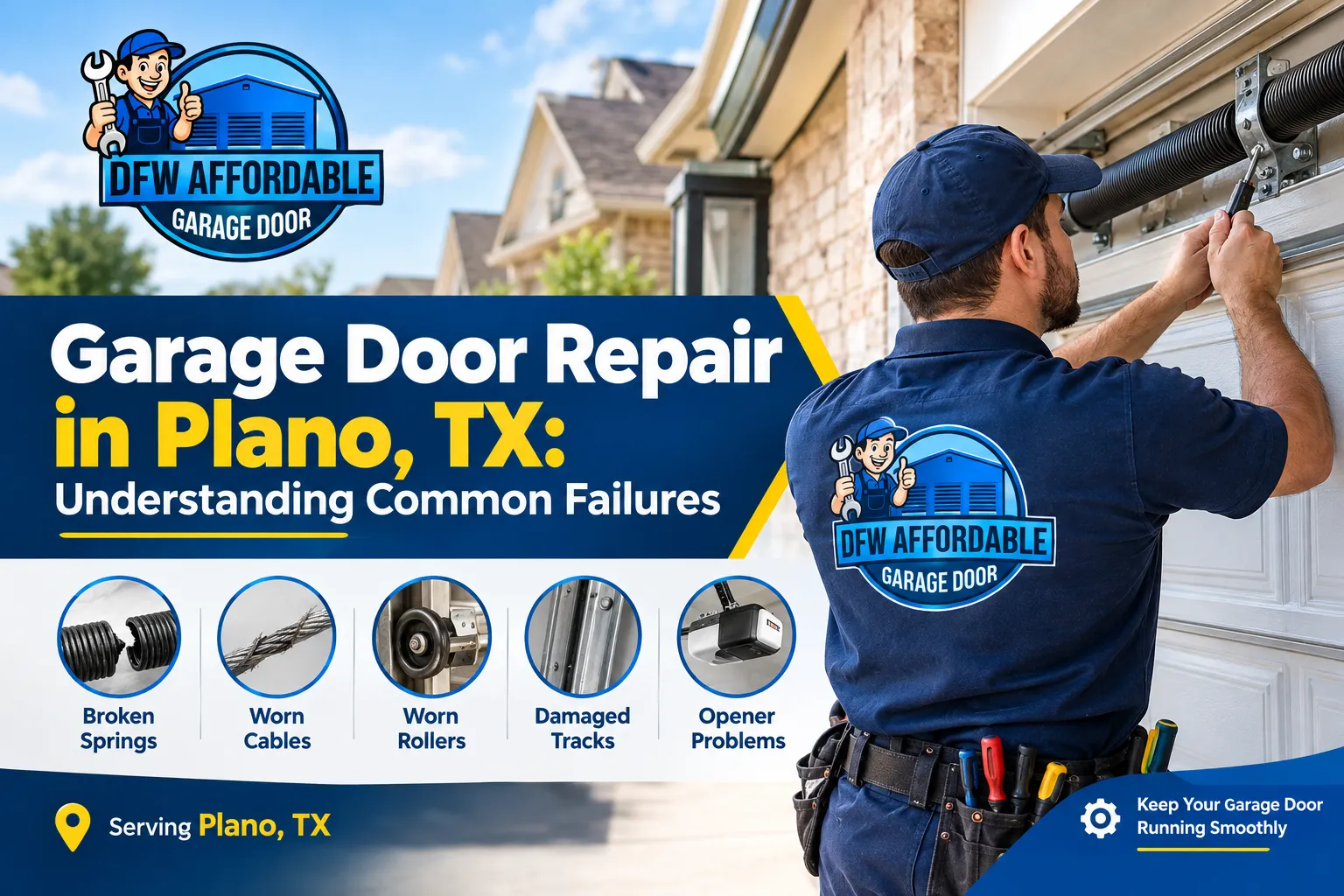
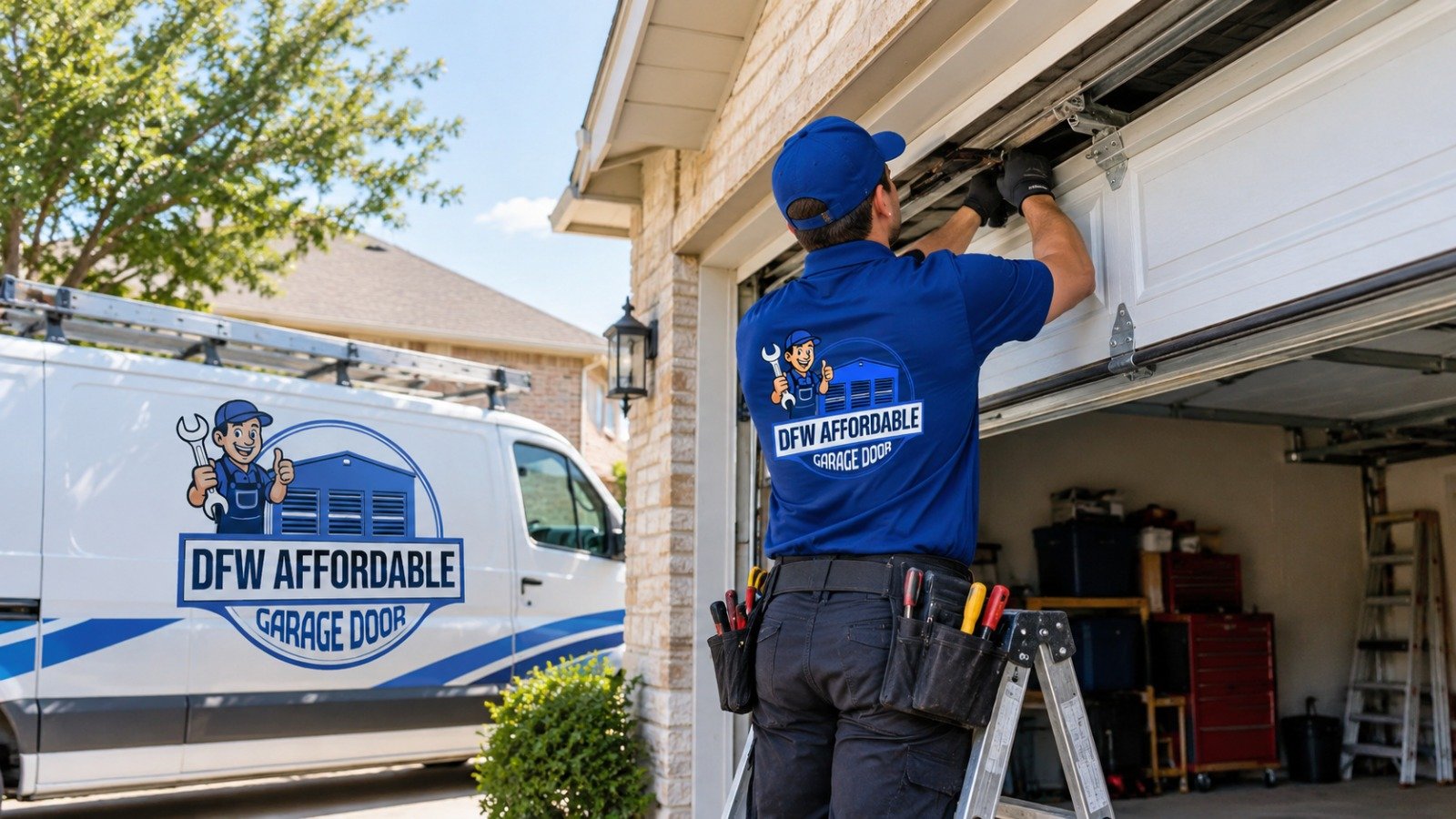

A garage door rarely fails without warning. Weeks before it refuses to lift, it grinds, shudders, or drops a little faster than it used to. Most people get used to those signs until the morning the car is stuck inside. If you are researching garage door repair in Sunnyvale, TX, the best first step is to work out what your door has been trying to tell you.
This guide walks through common symptoms, simple checks you can do safely, the parts that should never be a DIY job, and how to choose a repair provider with confidence.
What Your Garage Door Is Trying to Tell You
Different symptoms point to different causes. Matching what you see and hear to a likely problem helps you describe the issue clearly when you call someone.
Grinding, Scraping, or Squealing
Metal rubbing on metal usually means dry or worn rollers, hinges, or tracks. Sometimes it is only a lack of lubrication. Other times a roller has worn down or a track has shifted slightly out of line.
Shaking or Jerking Movement
A door that lurches as it travels often has bent track sections, loose hardware, or rollers that no longer glide. The motion may look minor, but it puts extra strain on the opener every time the door runs.
The Door Lifts a Little and Stops
If the opener hums or clicks and the door barely moves, the door may be too heavy for the opener to handle. That often means the spring system is no longer carrying its share of the weight. This is a safety concern, so do not keep pressing the button.
The Door Closes and Reverses
A door that touches the floor and bounces back up often has a sensor or travel limit issue. Dirt, a bumped sensor, or a misaligned eye near the bottom of the door frame can trigger this behavior.
One Side Hangs Lower Than the Other
A crooked door suggests uneven cable tension, a slipped cable, or a damaged bracket. Left alone, it can twist the panels and make the repair larger.
The Motor Runs but Nothing Moves
When you hear the opener working and the door stays put, the trolley, drive gear, or chain may have come loose or broken. The door itself may be fine, and the fix may be limited to the opener.
A Two-Minute Check Before You Call
Some causes are simple, and checking them costs nothing. Try these in order.
- Replace the battery in the wall button or remote and test again.
- Look at the two small sensors near the floor on each side of the door and make sure they are clean, facing each other, and showing steady lights.
- Check that the opener is plugged in and the outlet has power.
- Make sure the door is not in lock mode on the wall control.
- Look along the tracks for objects, debris, or visible dents.
If none of this helps, stop there. Describe what you tried when you call, since it saves time and helps the technician bring the right parts.
The Parts You Should Never Touch Yourself
A garage door is one of the heaviest moving objects in a home, and its balance depends on parts under serious tension.
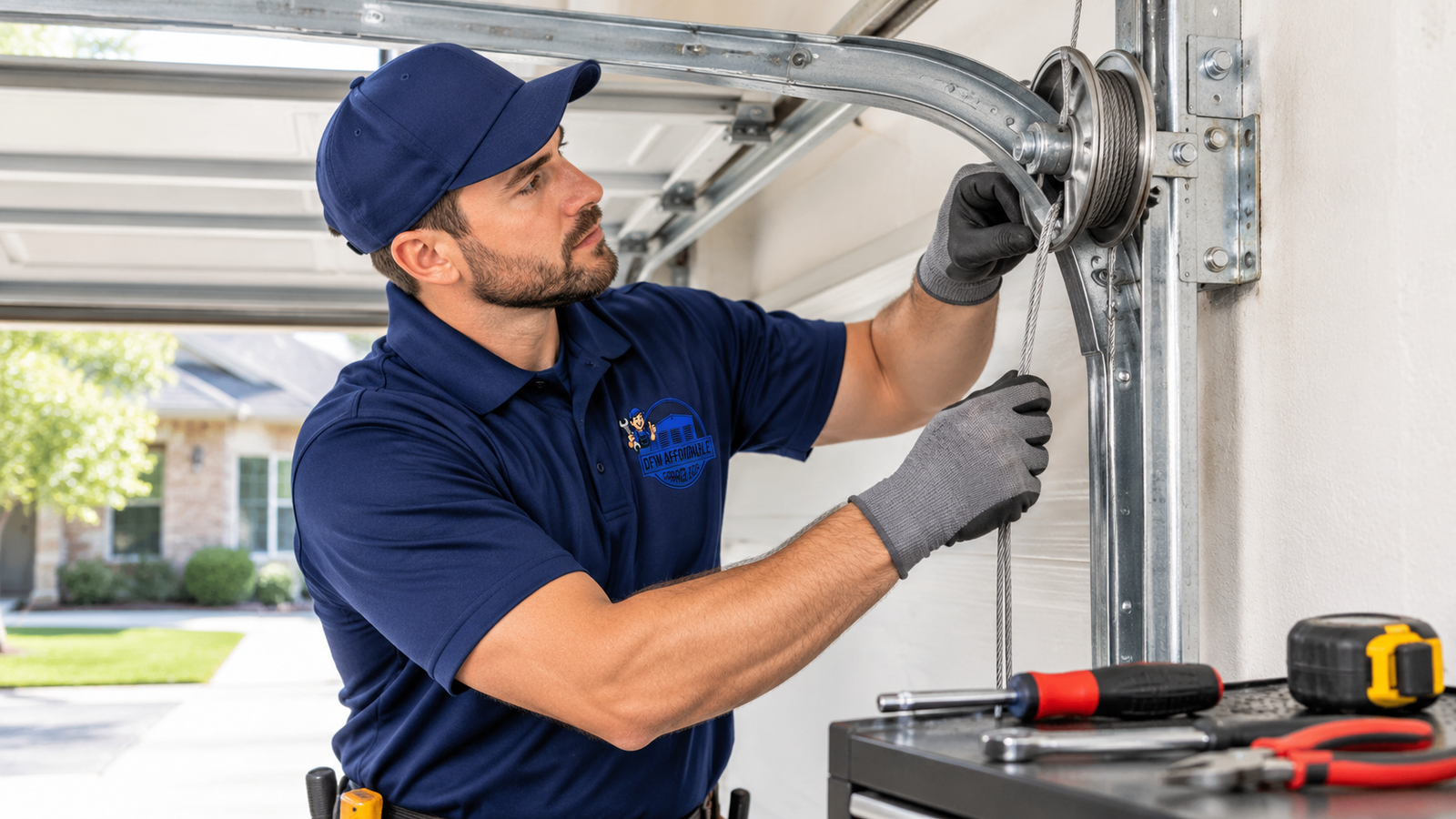
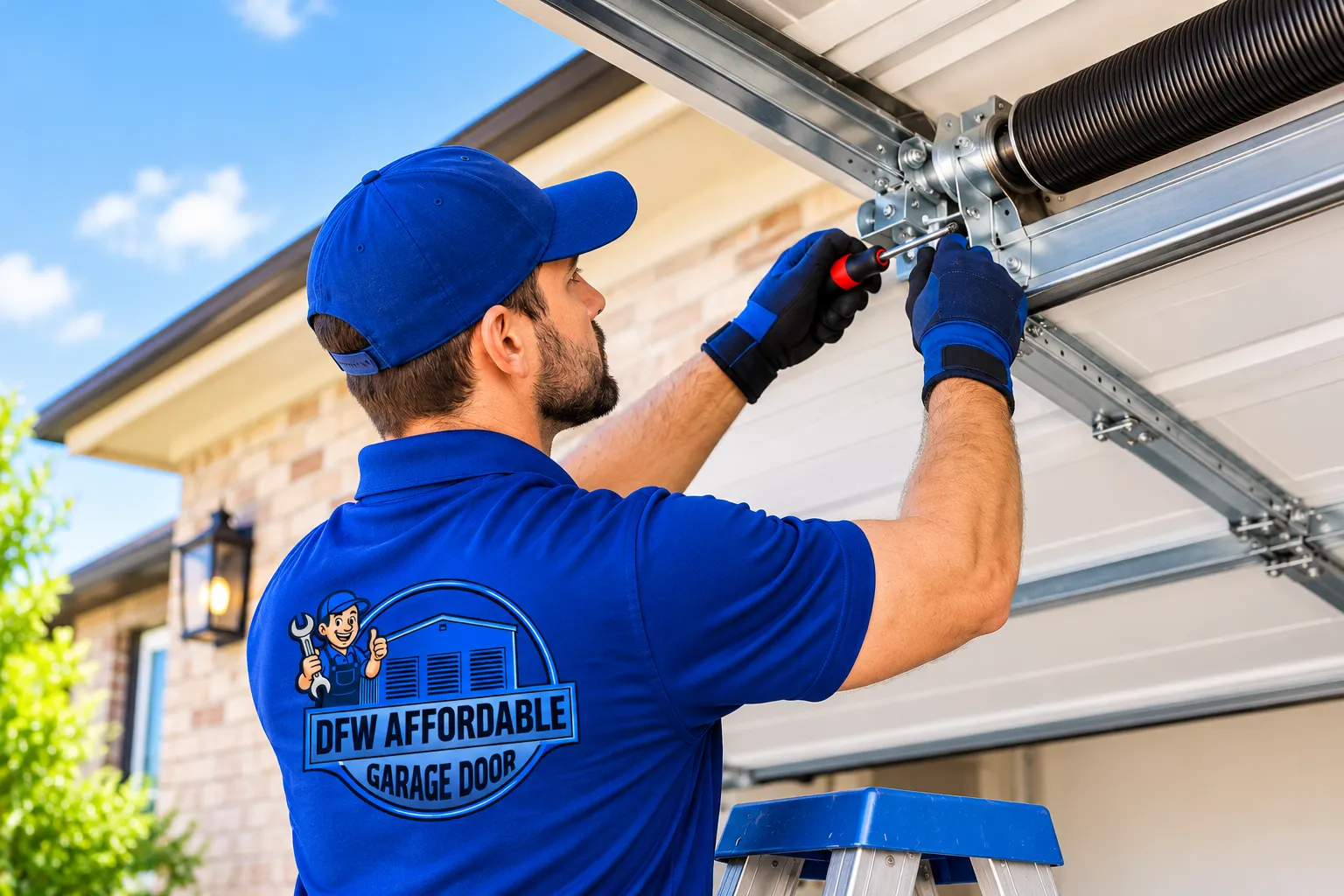
Springs and cables hold the door’s weight. When they are adjusted or released the wrong way, they can snap with enough force to cause severe injury. Brackets that anchor those cables carry the same risk. Even removing a panel from a door with a failing spring can cause it to fall.
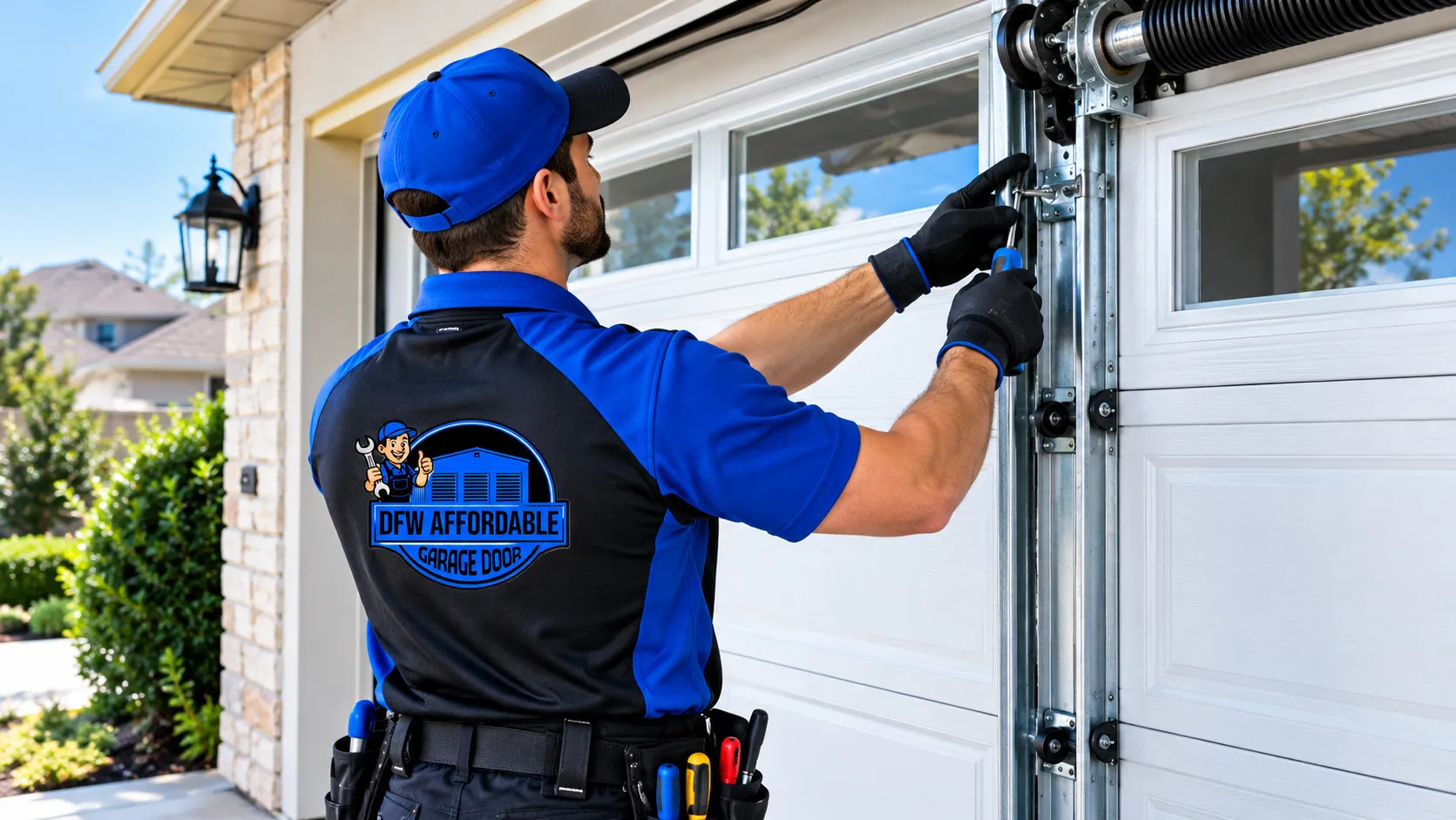
A safe rule works well here. Cleaning tracks, tightening visible loose bolts on the frame, and lubricating moving parts are reasonable homeowner tasks. Anything involving springs, cables, or the bottom brackets belongs to a trained technician with the right tools.
Why Garage Door Repair in Sunnyvale, TX Often Involves Weather and Daily Wear
North Texas conditions are hard on garage doors. Summer heat can dry out lubricants and warp certain materials. Seasonal temperature swings make metal expand and contract. Storms may leave debris near the tracks, and strong winds can stress doors that are already weak.
Daily use matters just as much. A door that serves a busy household can cycle many times a day, and every cycle wears down springs, rollers, and hinges. A door that sits unused for long stretches can also develop stiffness. Neither pattern means something is wrong, but both are good reasons to inspect the door periodically instead of waiting for a failure.
If your home is older, hardware may be outdated or may no longer match the door’s weight. A technician can look at how the whole system works together rather than only fixing the part that broke.
Repair or Replace? A Practical Way to Decide
Most garage door problems can be repaired, but replacement sometimes makes more sense.
Repair is usually enough when the door is structurally sound and a single part has failed, such as a spring, a roller, a sensor, or a cable. It also fits when the panels are straight and the door still closes cleanly.
Replacement deserves a closer look when several panels are cracked, rusted, or bent, when the door keeps going out of balance, or when repeated repairs address the same underlying wear. It also makes sense if you want better insulation, quieter operation, or a different appearance.
Ask the technician to explain what they found and why they recommend a given option. A good answer includes the condition of the door, not just a sales pitch.
Questions to Ask Before Work Begins
A short conversation upfront prevents confusion later. Consider asking the following.
- What exactly is wrong, and how did you find it?
- Which parts need replacing, and which ones can stay?
- Will you test the balance and safety features after the repair?
- Can you explain the full scope of the work before you begin?
- What should I watch for after you leave?
Clear, patient answers are a good sign. Vague responses or pressure to approve extra work immediately deserve caution.
Where DFW Affordable Garage Door Fits In
When you compare local providers, DFW Affordable Garage Door is one name you may see. As with any company, start by describing the symptom in detail. Mention what you hear, what the door does, and what you already checked, then ask whether the issue falls within the work they handle and how they explain a repair before starting.
That kind of conversation tells you far more than a general promise. If the answers are specific and the process makes sense, you can make a decision based on facts instead of urgency.
Keeping the Door Healthy Between Visits
A few light habits help a door last longer and make problems easier to spot.
Wipe down the tracks occasionally and keep them clear of grit. Apply a garage door lubricant to hinges, rollers, and springs, avoiding heavy grease that attracts dust. Watch and listen as the door runs, since changes in sound or speed are early clues.
Once in a while, test the door’s balance. Disconnect the opener using the manual release only if you know how, lift the door by hand to about halfway, and see whether it stays put. A door that drops or rises on its own is out of balance and needs professional attention. If you are unsure, skip this test and ask a technician to run it.
Also test the safety reversal. Place a sturdy object, such as a piece of wood, under the door and close it. The door should reverse when it touches the object. If it does not, the opener needs adjustment.
Ready to Get Your Garage Door Moving Smoothly Again?
Most repairs begin with a simple observation. Note what the door does, check the easy items, and avoid touching the high-tension parts. Then speak with a provider who explains the problem in plain language and tells you what to expect.
Why not write down the symptoms you have noticed and ask DFW Affordable Garage Door whether they can help with your situation?
Frequently Asked Questions
Why does my garage door shake when it opens or closes?
Shaking often comes from worn rollers, loose hardware, or tracks that are no longer straight. It can also mean the door is slightly out of balance. A technician can inspect the full system and find the cause.
Is it safe to use the door if one spring has broken?
It is best not to. A broken spring means the opener is trying to lift the full weight of the door alone, which can strain the motor and make the door unpredictable. Leave it closed and get it checked.
Can I fix a garage door sensor myself?
Often yes. Clean the lenses, make sure both sensors face each other, and check that nothing blocks the beam. If the lights still do not respond after that, wiring or the opener may be the cause.
Does a louder door always mean a bigger problem?
Not always. Dry hinges and rollers can make a door noisy without causing damage. Still, new grinding or banging sounds should be investigated, since they sometimes point to worn or damaged parts.
How often should a garage door be inspected?
There is no single schedule for every home. A door that gets heavy daily use or shows changes in sound, speed, or alignment deserves a closer look sooner. A quick visual check now and then helps you catch trouble early.