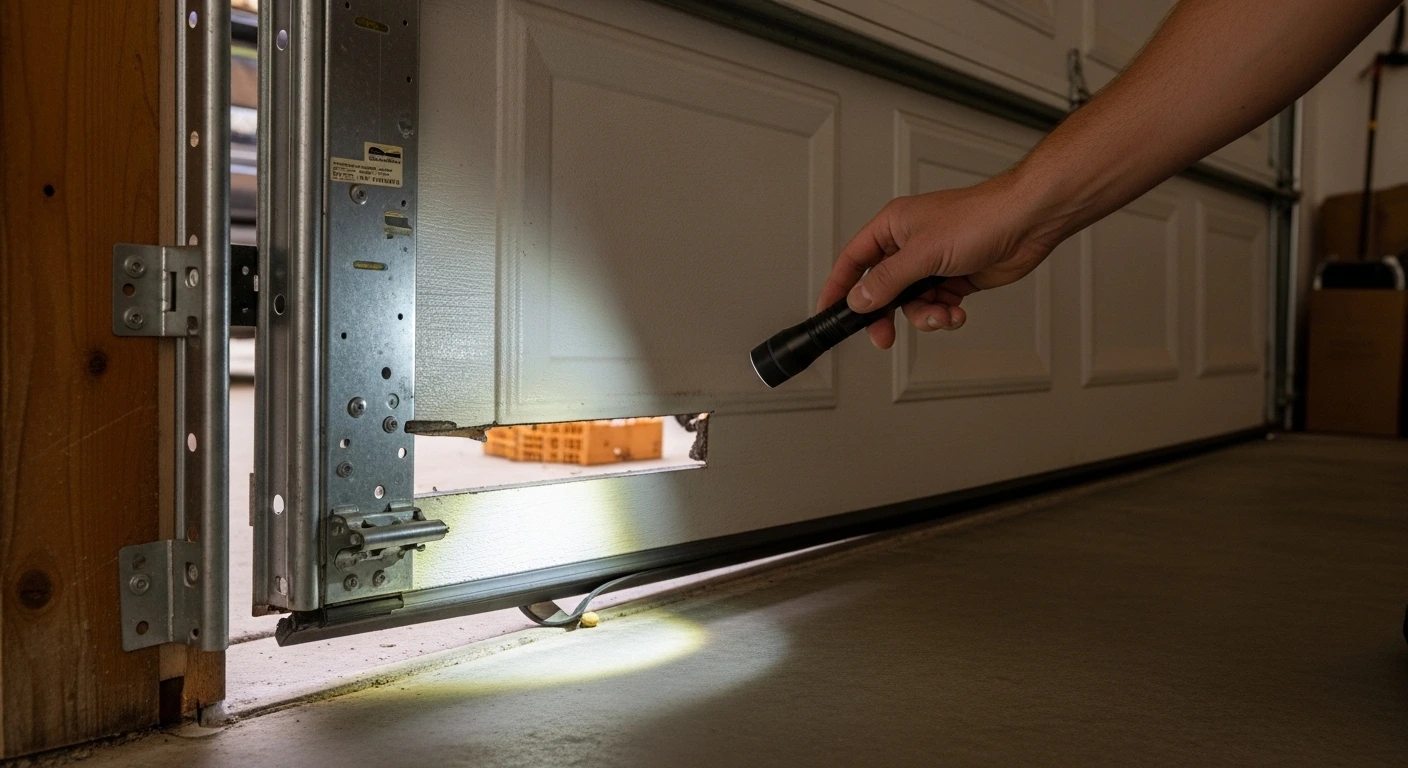

When your garage door won’t close all the way, it’s more than an inconvenience it’s a security risk, a safety concern, and often a warning sign of deeper mechanical issues. Many homeowners experience this problem suddenly, usually at night or when rushing out, and assume it’s a quick fix. In reality, this symptom often points to a failing safety system, alignment issue, or worn hardware that needs professional attention.
At DFW Affordable Garage Door, this is one of the most common service calls we receive. Below, we’ll explain why this happens, why temporary fixes don’t last, and when it’s time to stop troubleshooting and call for help.
Garage Door Won’t Close All the Way and Goes Back Up
If your garage door won’t close all the way and goes back up, the safety reversal system is doing exactly what it was designed to do prevent injury or damage. The most common causes include:
- Misaligned photo-eye sensors
- Dirty or obstructed sensor lenses
- Track obstructions near the floor
- Incorrect opener force settings
According to the CDC’s garage door safety guidance, automatic reversing mechanisms are a critical safety feature and should never be bypassed.
Garage Door Won’t Close Unless I Hold the Button
Many homeowners report that my garage door won’t close unless I hold the button down. This is a strong indicator that the opener’s safety sensors are malfunctioning or not communicating correctly.
Holding the wall button overrides the sensor system temporarily, but this is not a solution. Over time, this behavior can strain the opener motor and cause further failure.
If this issue continues, reviewing these repair warning signs can help determine whether professional service is required.
Garage Door Won’t Close With Remote But Will Open
When your garage door won’t close with remote but will open, the problem is rarely the remote itself. Common causes include:
- Sensor interference during closing only
- Signal interruption or wiring issues
- Opener logic board faults
This type of failure often confuses homeowners because opening works fine. Unfortunately, replacing remotes rarely fixes the underlying issue.
Garage Door Won’t Close All the Way Manually
If your garage door won’t close all the way manually, the problem is mechanical—not electrical. This typically points to:
- Warped or damaged tracks
- Worn rollers
- Cable tension imbalance
- Panel misalignment
The Harvard EHS Program warns that forcing heavy doors can result in sudden drops or loss of control.
Manual resistance is never something to ignore it’s one of the clearest signs professional garage door repair is needed.
Garage Door Won’t Close All the Way on One Side
When a garage door won’t close all the way on one side, the door has lost balance. This is often caused by:
- Frayed or stretched cables
- Uneven spring tension
- Track damage on one side
Continuing to operate the door in this condition can cause panels to twist or detach. Scheduling a professional door inspection can prevent permanent damage.
Why DIY Fixes Rarely Solve the Problem
Online tutorials often suggest cleaning sensors or adjusting settings, but these fixes only work when the issue is minor. DIY attempts frequently fail because:
- Sensor alignment issues return
- Mechanical wear goes unnoticed
- Incorrect force settings damage openers
- Underlying cable or spring problems remain
The DASMA emphasizes that improper adjustments can create unsafe operating conditions.
When to Call for Professional Garage Door Repair
You should stop troubleshooting and call for service if:
- The door reverses consistently
- Manual operation feels uneven or heavy
- One side closes lower than the other
- The opener strains or stalls
Professional technicians diagnose both safety systems and mechanical components, ensuring the door closes fully and safely every time.
Regular garage door maintenance service is the most effective way to prevent this issue from returning.
Don’t Ignore a Garage Door That Won’t Close
A garage door won’t close all the way for a reason and ignoring it can lead to security risks, costly repairs, or sudden failure. Early professional intervention protects your home, your vehicle, and your family.
DFW Affordable Garage Door provides precise diagnostics, reliable repairs, and long-term solutions designed to restore full, safe operation. When your garage door refuses to close, the safest next step is expert service.
Schedule service today to restore secure, reliable garage door operation.
Conclusion
A garage door that won’t close all the way is never a problem to ignore. Whether it’s reversing unexpectedly, closing unevenly, or requiring you to hold the wall button, these symptoms point to safety sensor issues, mechanical imbalance, or worn components that need proper attention. Temporary fixes may offer short relief, but they rarely solve the root cause.
Addressing the issue early prevents further strain on the opener, protects your home’s security, and reduces the risk of sudden failure. Professional inspection ensures both the safety system and mechanical parts are working together correctly. When your garage door refuses to close fully, timely expert repair is the safest and most reliable solution.
FAQs
Why does my garage door close and then go back up?
When a garage door closes and immediately reverses, the safety reversal system is detecting an obstruction or sensor misalignment. Dirty photo-eyes, track debris, or incorrect force settings commonly trigger this response. The system is designed to prevent injury, so consistent reversing requires proper inspection and adjustment.
Why won’t my garage door close unless I hold the wall button?
Holding the wall button overrides the safety sensor system, allowing the door to close despite a communication issue. This usually indicates misaligned or malfunctioning sensors. Continuing to override the system can strain the opener motor and should be professionally diagnosed.
Why will my garage door open but not close with the remote?
If the door opens normally but won’t close using the remote, the issue is often related to safety sensors or wiring interference during the closing cycle. Remote replacement rarely solves this. Sensor alignment or opener logic board problems are more common causes.
What causes a garage door to close unevenly on one side?
An uneven closing door typically indicates cable imbalance, spring tension issues, or track damage on one side. Operating the door in this condition can twist panels or worsen mechanical stress. Immediate professional service prevents further damage and restores safe operation.
When should I call a professional for a garage door that won’t close?
You should call for professional repair if the door reverses repeatedly, feels heavy during manual operation, closes unevenly, or the opener strains. Persistent closing problems signal mechanical wear or safety system failure that requires proper diagnosis and safe repair.