
Recognizing broken garage door spring symptoms early can protect your home, your vehicle, and your family from sudden damage or injury. Garage door springs are responsible for lifting hundreds of pounds every day. When a spring breaks, the entire system loses balance, trust, and safe operation.
At DFW Affordable Garage Door, we routinely respond to emergency calls where homeowners ignored early warning signs. This guide explains what broken really means in mechanical terms, why springs fail, how to test them safely, and when professional garage door repair becomes non-negotiable.
What a Broken Garage Door Spring Really Means
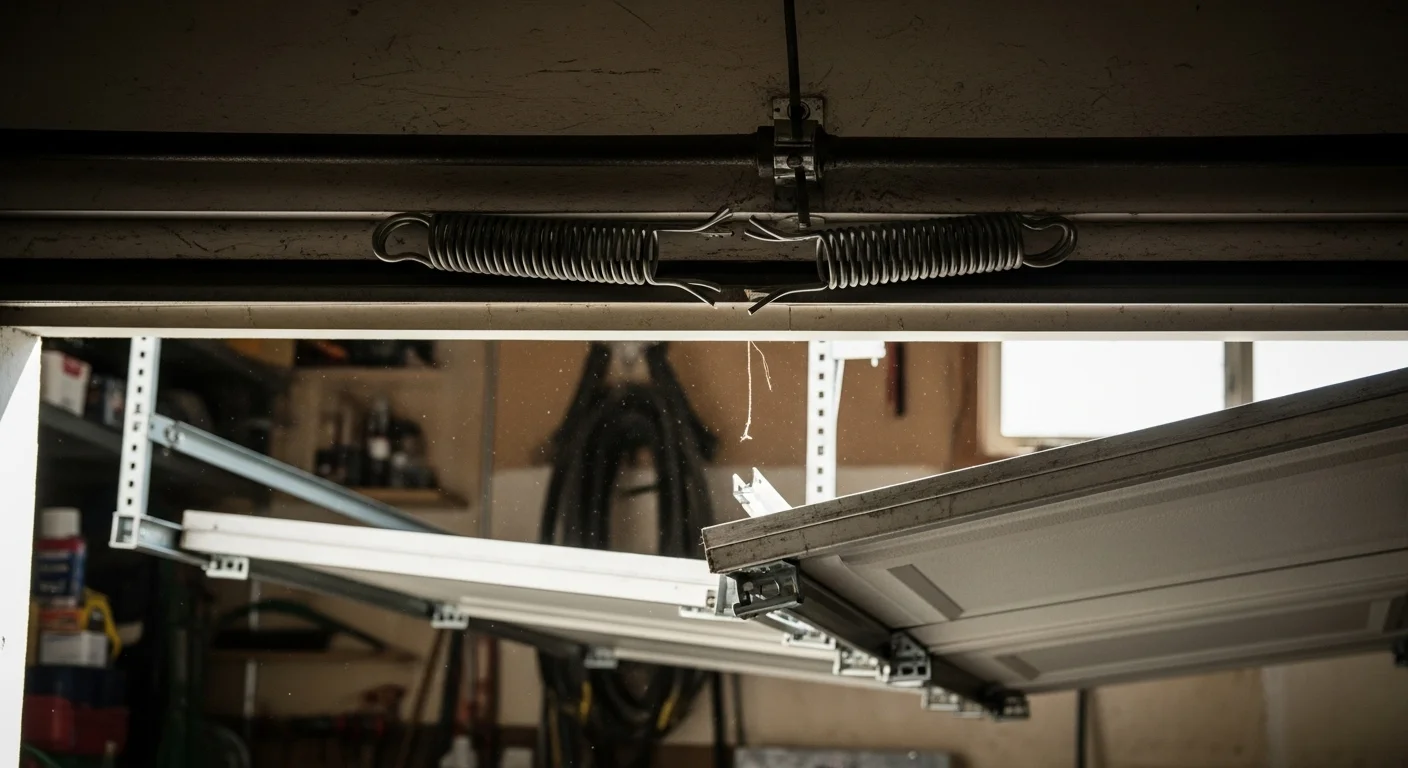
In simple dictionary terms, “broken” means something that no longer functions as intended. A garage door spring that has reached this point can no longer store or release energy correctly. Whether it’s a stretched torsion spring or a snapped extension spring, the door loses its engineered balance.
The CDC’s HSG notes that garage doors are among the heaviest moving objects in a household, making spring failure especially dangerous.
Most Common Broken Garage Door Spring Symptoms
Garage door springs rarely fail without warning. Common symptoms include:
- A loud bang or snapping sound like a gunshot
- Garage door opens only a few inches
- Door feels extremely heavy when lifted
- Opener strains or stops mid-cycle
- Visible gap in a torsion spring
If your door shows these signs, continuing to operate it can cause additional damage to cables, tracks, and the opener system.
Garage Door Spring Broken: How to Open Safely
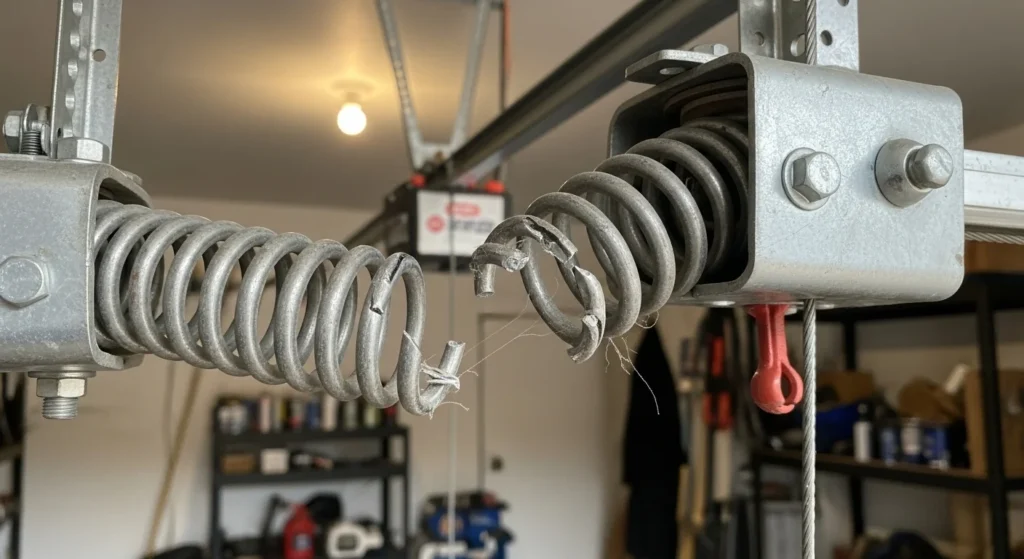
Homeowners often ask garage door spring broken how to open safely. The answer is with extreme caution. A broken spring removes counterbalance, meaning the full weight of the door is unsupported.
Attempting to force the door open can bend panels or cause sudden drops. The Harvard EHSP strongly advises against lifting heavy mechanical doors without proper controls.
If the door must be opened, professional technicians use controlled lifting methods and locking tools to prevent injury.
What Causes a Garage Door Spring to Break?
Understanding what causes a garage door spring to break helps prevent future failures. Common causes include:
- Normal wear from daily cycles
- Rust buildup reducing coil flexibility
- Improper spring sizing
- Lack of routine lubrication
- Extreme temperature changes
Even high-quality springs have a limited lifespan measured in cycles, not years.
How Long Do Garage Door Springs Last?
Homeowners often ask how long do garage door springs last. Standard torsion springs typically last 7–10 years or about 10,000 cycles. Heavy usage, poor maintenance, or incorrect installation can shorten this lifespan significantly.
Scheduling routine garage maintenance services can extend spring life and reduce emergency breakdowns.
How to Test Garage Door Spring Condition
If you’re wondering how to test garage door spring condition, a basic balance test can reveal issues:
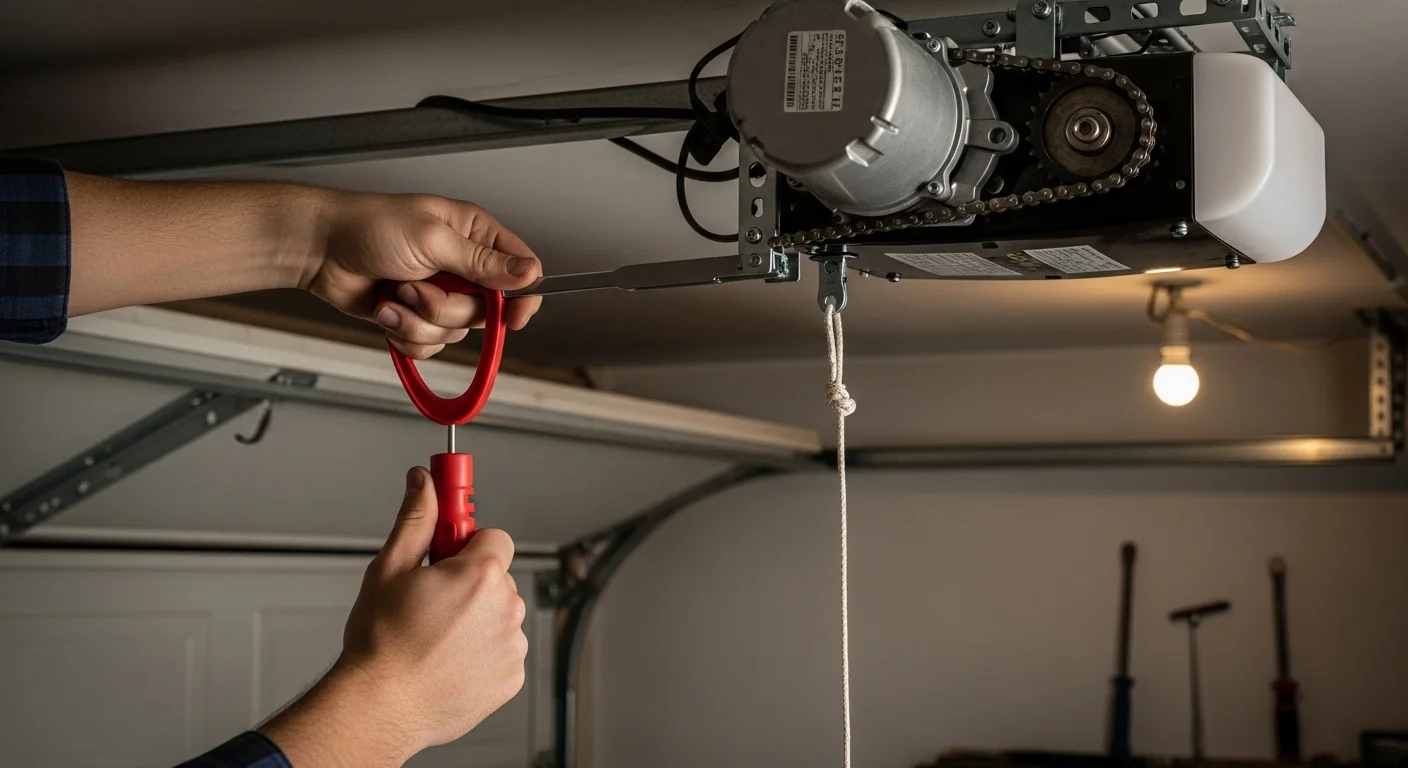
- Disconnect the opener
- Manually lift the door halfway
- Observe if it stays in place
If the door drops or rises rapidly, spring tension is compromised. This test should only be performed if the door is stable and undamaged.
Why DIY Spring Repair Almost Always Fails
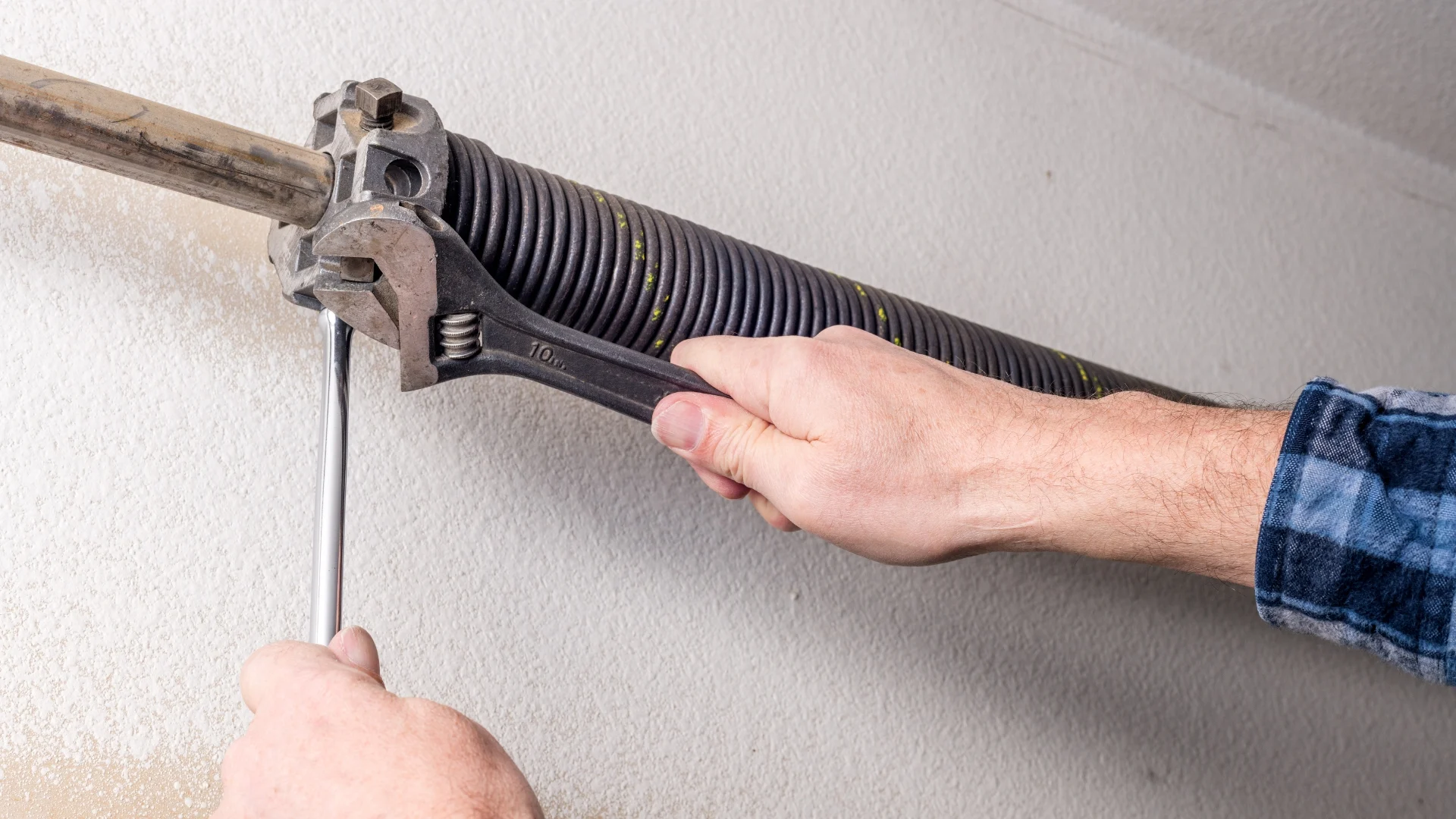
Garage door torsion spring repair is not a DIY task. Springs are under extreme torque, and improper handling can result in severe injuries. DIY attempts often lead to:
- Incorrect spring tension
- Unbalanced door movement
- Damaged bearings and cables
- Voided warranties
If your door shows warning signs, reviewing these repair warning signs can help determine when expert service is needed.
When Professional Garage Door Repair Is Required
Professional garage door repair is necessary when:
- A spring has snapped or separated
- The door feels uneven or unstable
- The opener struggles or stalls
- Cables appear loose or frayed
A trained technician performs a full system evaluation, replacing springs with correct sizing and restoring balance safely. A scheduled door inspection services can identify hidden issues before failure.
How Preventive Maintenance Protects Your Garage Door System
Preventive service builds long-term reliability and trust in your garage door system. Lubrication, cycle testing, and tension calibration prevent sudden breakdowns.
The DA Association confirms that professionally maintained doors experience fewer spring-related failures.
Address Broken Garage Door Spring Symptoms Early
Ignoring broken garage door spring symptoms puts unnecessary stress on your entire system and increases safety risks. Early intervention preserves door integrity, prevents costly repairs, and restores reliable operation.
DFW Affordable Garage Door provides expert spring replacement, precise balancing, and dependable service backed by experience. When your garage door shows signs of spring failure, the safest next step is professional evaluation.
Schedule service today to restore safe, balanced garage door operation.
FAQs
1. What happens if you keep using a garage door with a broken spring?
Continuing to use a garage door with a broken spring can damage the opener, cables, and tracks while significantly increasing the risk of injury or sudden door collapse.
2. Can a garage door spring break without visible damage?
Yes. Springs can lose tension internally due to wear or rust without snapping, causing imbalance, heavy lifting, or uneven door movement.
3. Does one broken spring affect the entire garage door system?
Absolutely. Even a single failed spring throws off door balance, forcing other components to compensate and accelerating overall system failure.
4. Are loud noises always a sign of a broken garage door spring?
Not always, but a sudden loud bang is one of the most common signs of a spring snapping and should never be ignored.
5. Should both springs be replaced if only one breaks?
Yes. Springs wear evenly over time, and replacing both ensures proper balance, smoother operation, and longer system lifespan.