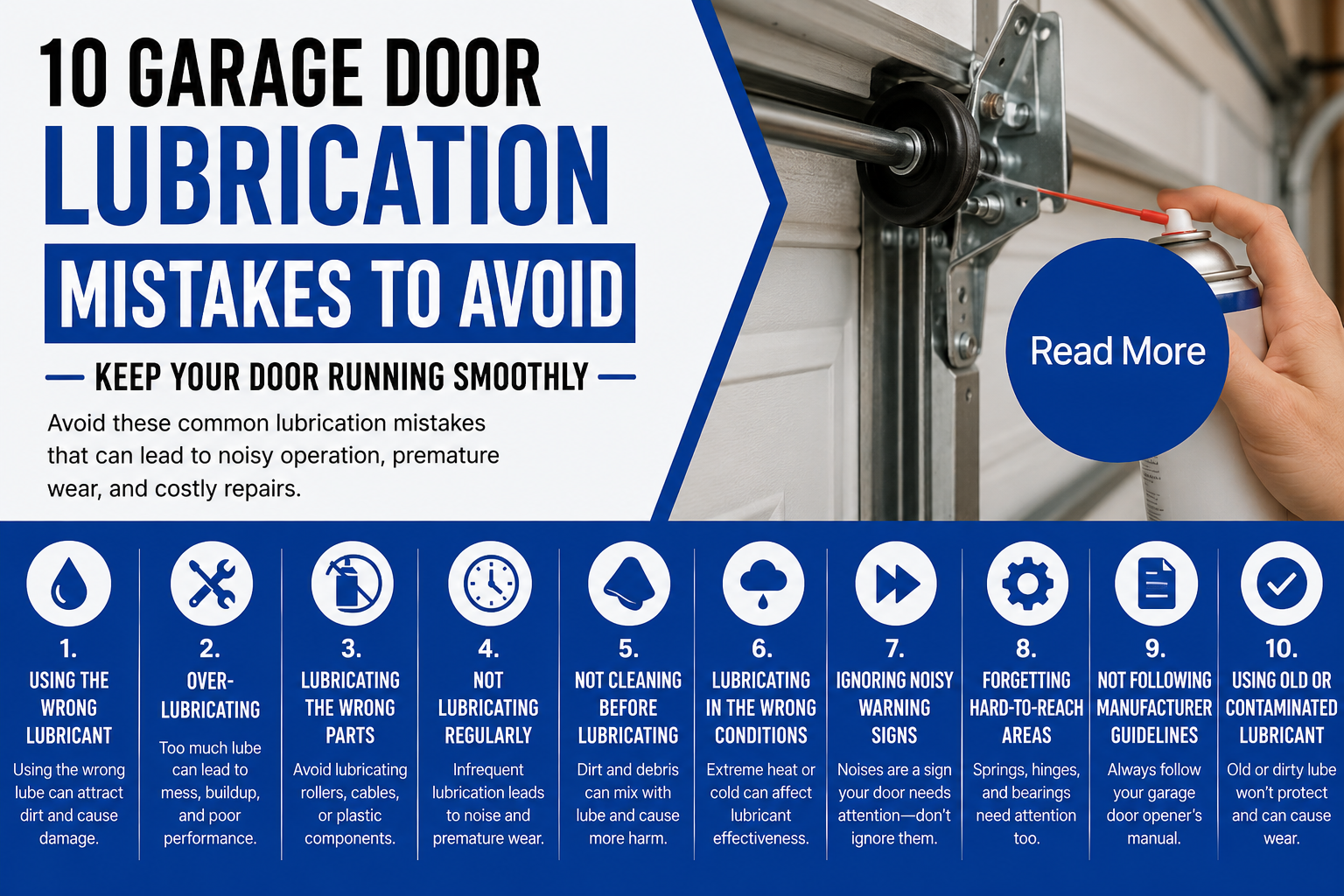

If you’re searching for garage door lubrication mistakes to avoid, you’re already ahead of most homeowners. A properly maintained garage door depends on correct door lubrication, but one wrong move can lead to damaged garage door rollers, worn garage door tracks, and expensive system failure. When issues escalate unexpectedly, emergency help may be required through our 24-hour repair service.
At DFW Affordable Garage Door, we see daily how improper lubrication and wrong product choices turn simple maintenance into major repairs. This guide breaks down what causes these problems, how homeowners attempt DIY fixes, and why professional service often becomes necessary to ensure your garage door operates safely and smoothly.
What Causes Garage Door Lubrication Problems?
Most lubrication issues begin with misunderstanding how a garage door system actually works. It is not just about spraying oil it involves precise application to moving components such as bearing plates, rollers, hinges, and the top of the rail. Incorrect maintenance leads to friction buildup, metal wear, and noisy opening and closing cycles.
- Using the wrong garage door lubricant or oil-based products
- Skipping regular lubrication schedules
- Over-applying or under-applying lubricant
- Ignoring dry garage door tracks and rollers
- Not disconnecting the power source before maintenance
According to EPA Safer Choice Program, chemical products must be carefully selected and applied to reduce environmental and material risks, especially in mechanical systems exposed to friction and heat.
DIY Methods Homeowners Commonly Try (Educational Overview)
Many homeowners attempt to lubricate your garage system themselves, believing it only requires a quick spray. While basic maintenance is possible, understanding how to lubricate garage door components correctly is essential.
Typical DIY approach includes:
- Using a spray lubricant labeled as silicone based lubricant garage door safe
- Applying lubricant to hinges, rollers, and springs
- Cleaning visible dust from door tracks
- Manually operating the door after application
- Checking for noise reduction during movement
The correct best way to lubricate garage door involves using a silicone based lubricant that is specifically designed for heavy-duty mechanical systems—not household oils or grease.
Why DIY Garage Door Lubrication Often Fails
Even when homeowners follow instructions, DIY lubrication often fails due to overlooked mechanical complexity. A garage door is not a simple hinge system it is a tension-balanced machine that depends on synchronized movement across multiple components.
Common failure reasons include:
- Incorrect application on garage door tracks instead of rollers or hinges
- Over-lubricating causing dust buildup and friction
- Using incompatible garage door grease
- Ignoring hidden wear on bearing plates and springs
- Failing to inspect misalignment during maintenance
Industry guidance from the Door & Access Systems Manufacturers Association (DASMA) emphasizes that improper lubrication can accelerate component fatigue and reduce system lifespan significantly.
Risks of Using the Wrong Lubricant
Choosing the wrong what lube to use on garage door product is one of the most damaging mistakes. Heavy grease or petroleum-based oils may seem effective, but they attract dirt and harden over time.
- Clogged garage door rollers
- Increased strain on opener motor
- Noise during opening and closing
- Accelerated rust formation on metal parts
- Reduced efficiency of door movement
A properly selected silicone based lubricant garage door formula ensures smooth operation without buildup or residue.
For safety standards and material handling awareness, the OSHA lubrication safety guidelines provide important insights into handling industrial and mechanical lubricants safely.
Signs You Need Professional Garage Door Service
If lubrication issues persist, your system may require professional inspection. Ignoring symptoms can lead to full system failure.
Warning signs include:
- Loud grinding or squeaking even after lubrication
- Door shaking during movement
- Uneven lifting or dropping
- Motor strain or humming noises
- Visible wear on tracks or rollers
If you notice these issues, it may involve deeper mechanical problems such as spring tension imbalance or cable wear. Learn more about related issues in our guide on spring warning signs.
For broader maintenance issues, our garage door maintenance service ensures long-term system reliability.
Why Choose DFW Affordable Garage Door
DFW Affordable Garage Door specializes in diagnosing lubrication mistakes and restoring full system performance. Our technicians understand every component, from garage door opener systems to roller alignment and track cleaning.
- Expert diagnosis of lubrication failures
- Heavy-duty professional-grade lubricants
- Full system inspection and safety testing
- Fast local response across Dallas Fort Worth
- Preventive maintenance recommendations
We don’t just fix symptoms we correct the root cause so your garage door continues smooth, quiet, and safe operation.
FAQs Garage Door Keypad & Lubrication Issues
What lube to use on garage door?
A silicone based lubricant garage door product is recommended. It reduces friction without attracting dust or damaging components.
Garage door oil maintenance is it necessary?
Yes, regular garage door oil maintenance helps prevent rust and wear on moving parts, but it must be done correctly and not over-applied.
How often should I lubricate my garage door?
Most systems need lubrication every 3–6 months depending on usage and environment conditions.
What lubricant for garage door is best?
A specifically designed silicone spray is best for rollers, hinges, and tracks.
Best way to lubricate garage door?
The best way to lubricate garage door components is to clean first, then apply light silicone spray to moving parts only.
Can I use grease instead of lubricant?
Heavy grease is not recommended as it can clog rollers and attract dirt over time.
Where to lube garage door?
Focus on rollers, hinges, springs, bearing plates, and top of the rail — not the tracks themselves.
How to lubricate garage door safely?
Disconnect power source, close your garage door, apply lubricant lightly, and test movement carefully.
Professional Help for Lubrication and Repair Issues
If you’re unsure about how to lubricate garage door systems or suspect damage caused by improper maintenance, professional inspection is the safest step. Small mistakes in lubrication often hide deeper mechanical issues that worsen over time.
Working with DFW Affordable Garage Door ensures your system receives correct garage door oil maintenance, proper alignment checks, and long-term reliability.
Conclusion
Understanding garage door lubrication mistakes to avoid can save homeowners from costly repairs and unexpected breakdowns. While DIY lubrication may seem simple, the complexity of modern garage systems often requires trained expertise. If your door shows signs of wear or poor performance after maintenance, professional service is the safest solution.
When you’re ready to ensure safe, quiet, and reliable operation, schedule an inspection with DFW Affordable Garage Door and let our technicians handle the rest with precision and care.