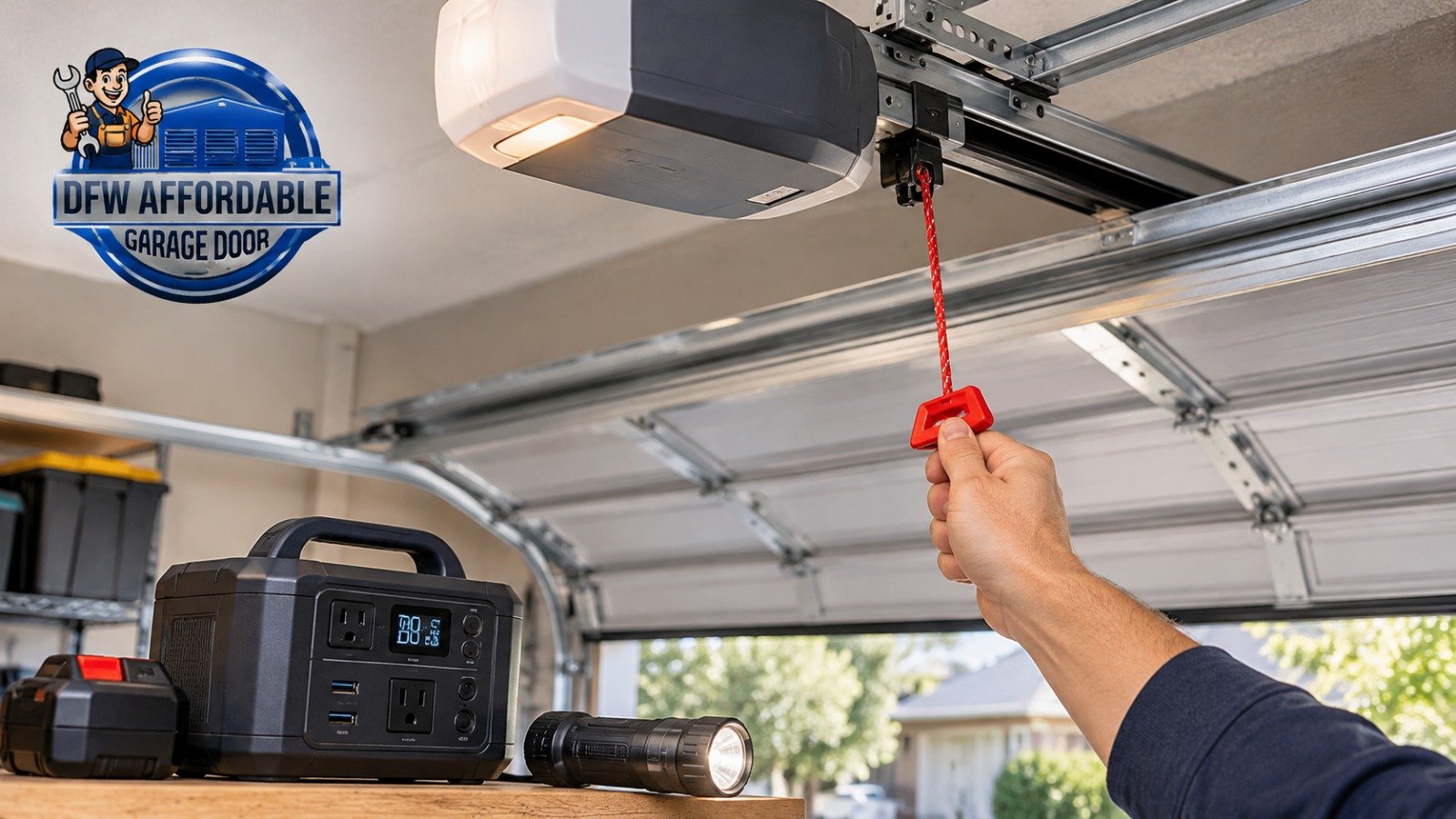

Storms, ice, and heat waves can knock out power across North Texas, and a garage door that will not open can turn a minor outage into a real problem. Your car may be stuck inside, or your family may be unable to get in. The good news is that every garage door opener has a way to work around a power failure. At DFW Affordable Garage Door, we help DFW homeowners with garage door problems every day, and power outages are one of the most common calls we get. This guide explains what happens to your door, how to use the manual release safely, and which backup options are worth considering.
What Happens When the Power Goes Out
When the power fails, your garage door opener stops working. The wall button, remote, and keypad will not respond, and the door stays wherever it was. If it was closed, it stays closed. If it was open, it stays open, which leaves your garage exposed.
The opener is only the motor that moves the door. The door itself is balanced by heavy springs that do most of the lifting work. That is why a healthy garage door can still be lifted by hand once the opener is disconnected.
How the Manual Release Works
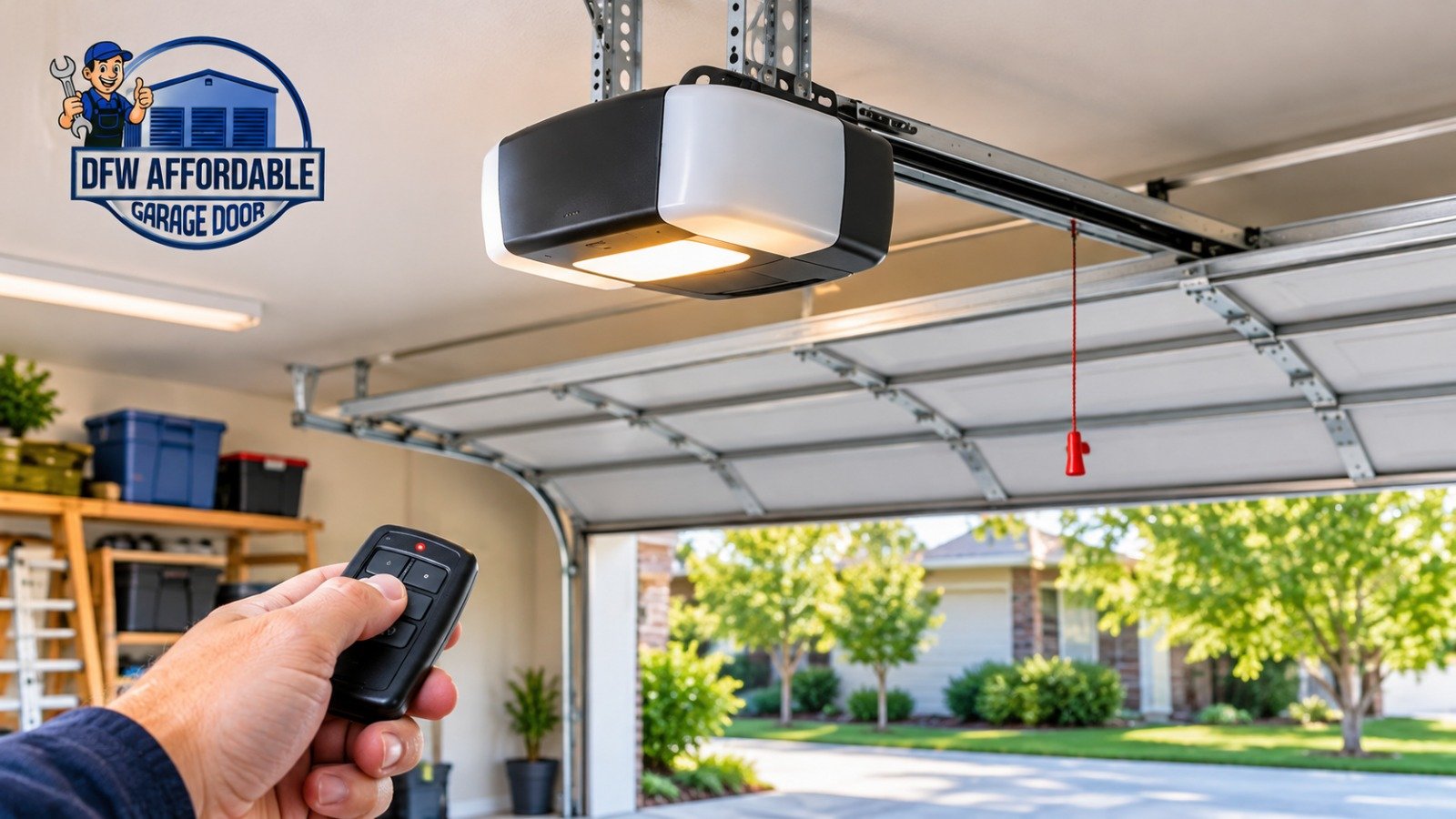
Every opener has an emergency release, usually a red cord with a handle hanging from the trolley on the rail. Pulling it disconnects the door from the opener’s drive system so you can move the door by hand.
To use it:
- Close the door first if you can do so safely.
- Pull the red cord down, and back toward the door on most models, until you hear the trolley disconnect.
- Lift the door by the bottom handles or grip points, using smooth, steady force.
- Keep your hands clear of the tracks, springs, and joints between panels.
Once released, the door should lift fairly easily. If it feels extremely heavy, that is a warning sign, and we cover it below.
Safety Tips Before You Pull the Cord
A garage door is the heaviest moving part in most homes, so safety matters:
- Release the door when it is closed whenever possible. If it is open and the springs are weak or broken, it can drop quickly.
- Never stand under a moving door or put your fingers near the tracks or hinges.
- Do not use the release cord to pull the door open or closed. It is only meant to disconnect the trolley.
- Test the balance. A properly balanced door should stay roughly halfway up when you let go. If it drops or rises on its own, the springs need attention.
- Never try to adjust, remove, or repair torsion springs yourself. They are under extreme tension.
How to Re-Engage the Opener When Power Returns
Once the power is back, reconnecting is usually simple. On many models, you pull the release cord toward the opener, or lift the door to the trolley position, and the carriage reconnects the next time you run the opener. The exact steps vary by brand, so check your owner’s manual. After reconnecting, run the door through a full cycle and make sure it opens, closes, and reverses properly.
Backup Options for Power Outages
You do not need to be stuck during every outage. These options can help:
- Battery backup: Many modern openers include a built-in battery, and add-on units exist for some models. The battery keeps the opener running for a number of cycles during an outage. Upgrading to a modern garage door opener with this feature is one of the easiest ways to avoid being stuck.
- Portable generator: A generator can power your opener during longer outages. Make sure it supplies stable power and is used safely and outdoors.
- Outside emergency release: Some garage doors have a keyed release on the outside, which lets you disconnect the opener without entering the garage.
- Side entry door: A working side door with a key gives you a way in to use the manual release.
- A simple plan: Keep the release cord accessible, make sure everyone in the house knows how it works, and park outside before a storm if you expect an outage.
Securing Your Garage While the Opener Is Disconnected
When the opener is disconnected, the door can be lifted by hand, including from outside. If you must leave the house during an outage, take extra steps to secure it. Use a manual lock or slide bolt if your door has one, and make sure the entry door from the garage into your home is locked. Reconnect the opener as soon as power returns.
When to Call a Professional
Some warning signs mean you should stop and call for help:
- The door is very heavy after releasing the opener
- The door drops quickly when you let go
- You see a broken spring, frayed cable, or bent track
- The release cord is jammed or the trolley will not disconnect
These problems point to spring or cable issues, which are dangerous to repair without proper tools and training.
Frequently Asked Questions
Can I open my garage door by hand during a power outage?
Yes. Use the emergency release to disconnect the opener, then lift the door manually. A balanced door should lift with moderate effort.
Is it safe to use the manual release?
It is safe when done correctly. Release the door while it is closed when possible and keep your hands clear. If the door feels too heavy or drops, stop and call a professional.
Will my opener work with a generator?
Many openers work with a generator if it provides stable power. Check your manufacturer’s guidance and always run the generator safely outdoors.
How long does a battery backup last?
It varies by model. Most are designed to run the opener for a limited number of cycles, so check the specifications before you buy.
Does DFW Affordable Garage Door offer emergency service?
Yes. We offer emergency and same-day garage door service across DFW. Call (469) 949-1708 for help.
Final Thoughts
A power outage does not have to leave you locked in or out. Know where your release cord is, learn how to use it safely, and consider a battery backup for peace of mind. If your door feels heavy, drops, or will not release, call DFW Affordable Garage Door at (469) 949-1708 or request a quote today.