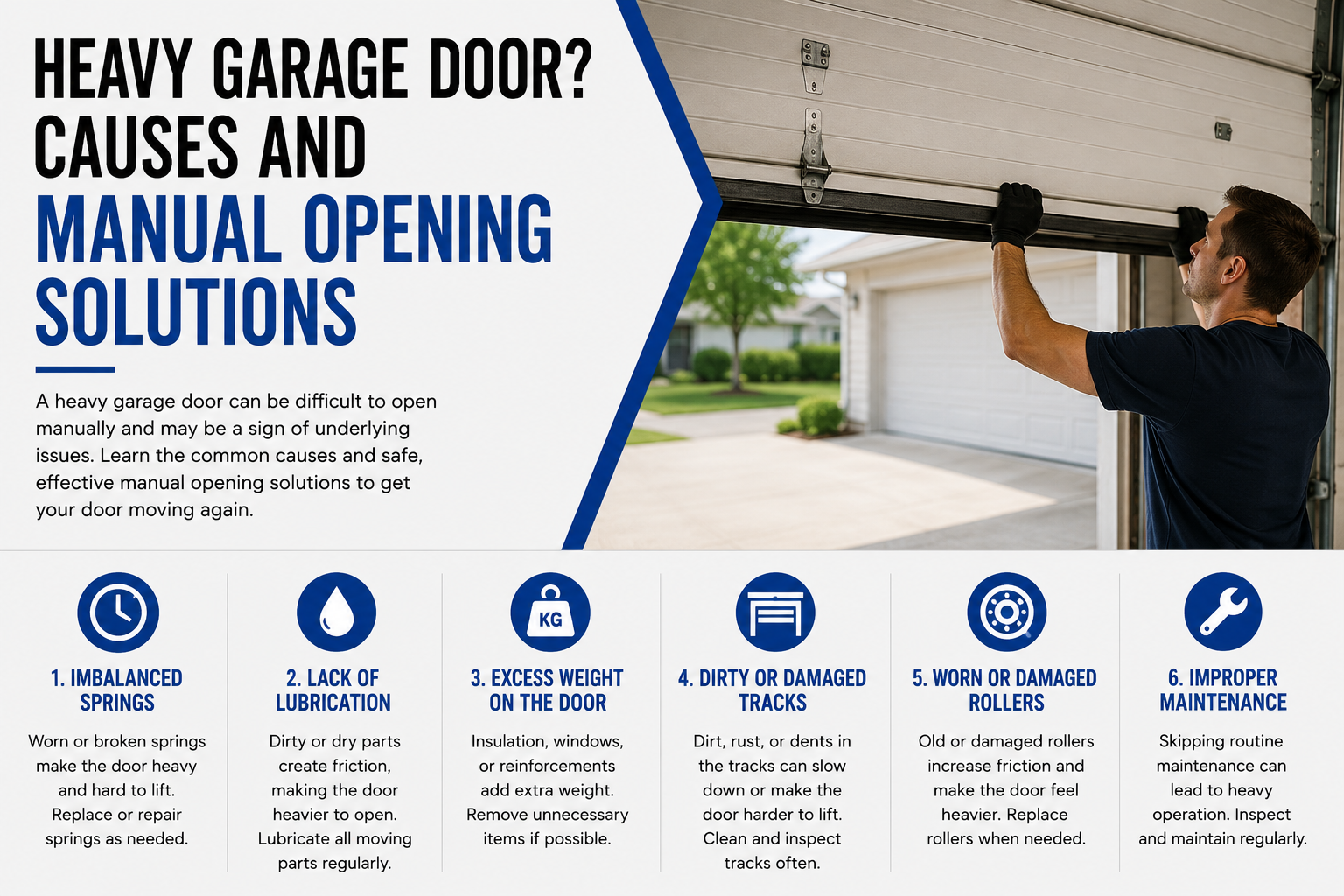

A garage door should open smoothly and require very little effort when operated by hand. If you suddenly notice that your garage door feels unusually heavy, it’s a sign that one or more components may not be functioning properly. While many homeowners assume the garage door itself has become heavier, the real problem usually lies with the springs, cables, rollers, or other hardware that helps support the door’s weight.
Ignoring a heavy garage door can lead to additional damage, costly repairs, or even serious safety hazards. Understanding what causes the problem allows you to take action before a minor issue turns into a complete garage door failure.
If your garage door has become difficult to lift manually, this guide explains the most common causes, warning signs, and professional repair solutions.
How Should a Properly Working Garage Door Feel?
A properly balanced garage door should lift with minimal force. Even large double garage doors should feel relatively light because the torsion spring system supports nearly all of the door’s weight.
When disconnected from the garage door opener using the emergency release cord, the door should:
- Lift smoothly without excessive force
- Stay halfway open when released
- Open quietly without jerking
- Close in a controlled manner
If your garage door fails any of these tests, it likely requires professional inspection.
Common Reasons Your Garage Door Feels Heavy
Several mechanical problems can make a garage door feel much heavier than normal.
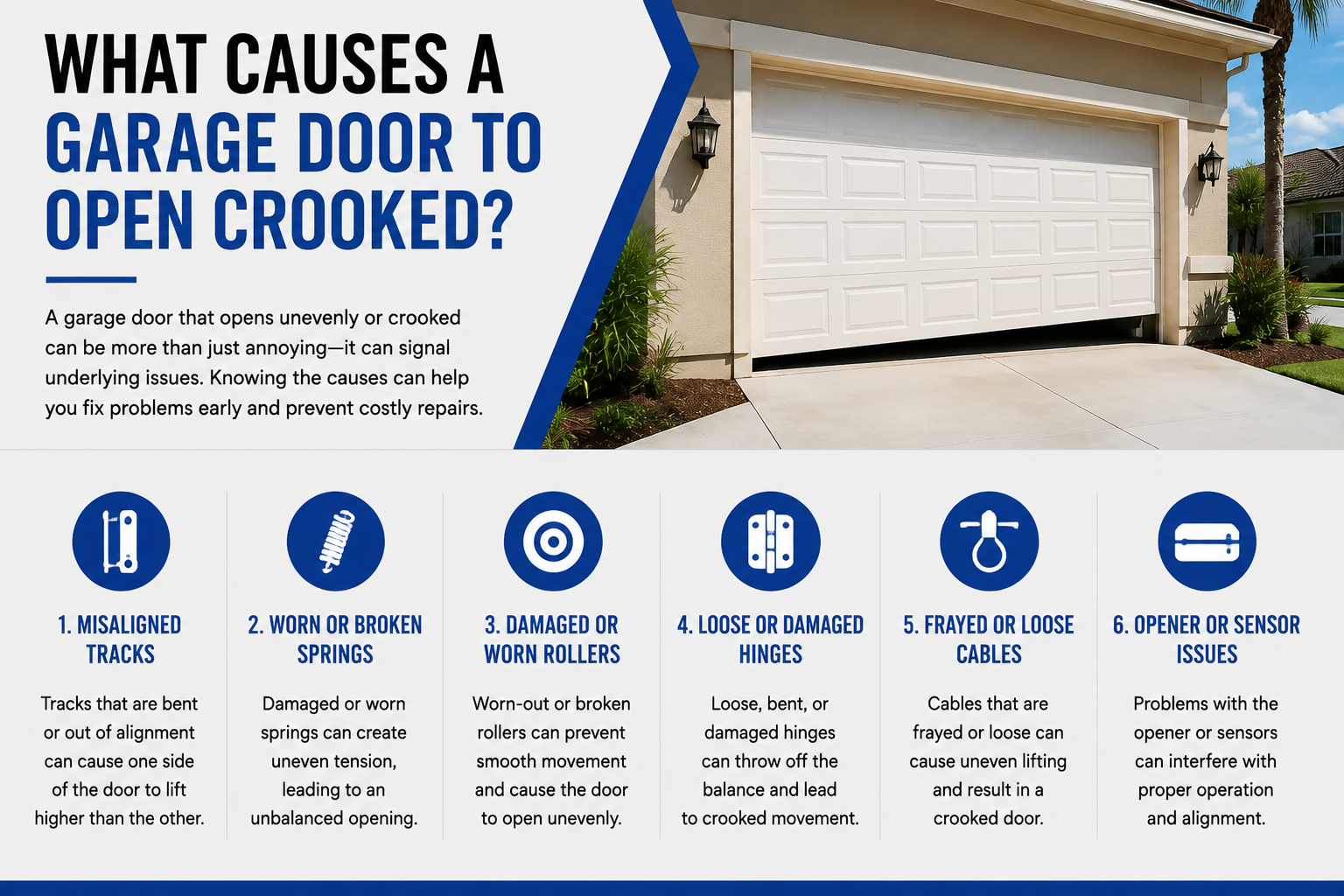
Broken or Weak Garage Door Springs
The garage door springs perform most of the lifting work. When one spring breaks or weakens, the opener and your arms must lift almost the entire weight of the door.
Common symptoms include:
- Extremely heavy garage door
- Loud bang from the garage
- Door opens only a few inches
- Garage door closes rapidly
- Visible gap in the torsion spring
Spring replacement should always be handled by experienced technicians because springs remain under extremely high tension.
Garage Door Is Out of Balance
Garage doors are carefully balanced using properly adjusted springs.
Over time, spring tension changes due to:
- Normal wear
- Temperature fluctuations
- Metal fatigue
- Continuous daily operation
An unbalanced garage door places extra stress on both the opener and every moving component.
Simple Balance Test
Disconnect the opener using the emergency release.
Lift the door halfway.
If the door:
- Falls quickly
- Rises by itself
- Feels difficult to hold
it is no longer properly balanced.
Worn or Damaged Lift Cables
Garage door cables work together with the springs to lift and lower the door safely.
If a cable becomes:
- Frayed
- Loose
- Rusted
- Broken
the door may feel significantly heavier or become uneven while opening.
Never attempt to repair lift cables yourself because they are under significant tension.
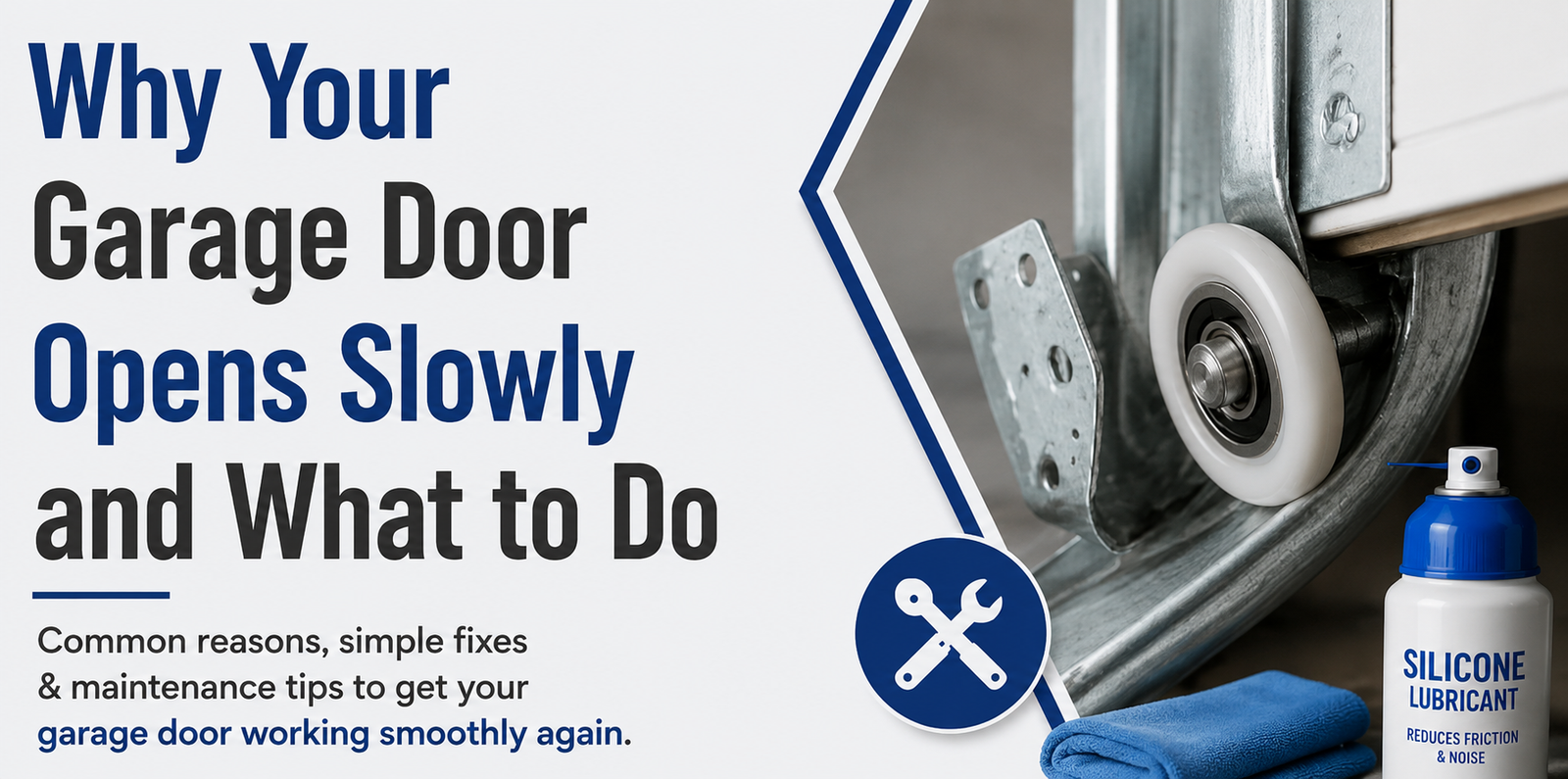
Worn Garage Door Rollers
Rollers allow the garage door to travel smoothly along the tracks.
Old or damaged rollers create friction that makes opening the door much more difficult.
Signs include:
- Grinding noises
- Jerky movement
- Door sticking halfway
- Visible roller damage
Replacing worn rollers restores smoother operation while reducing strain on the opener.
Bent or Dirty Garage Door Tracks
Garage door tracks guide the rollers during operation.
Over time, tracks may develop:
- Dirt buildup
- Rust
- Small bends
- Loose mounting brackets
These problems create resistance, making the garage door feel heavier during manual operation.
Professional track adjustment prevents additional hardware damage.
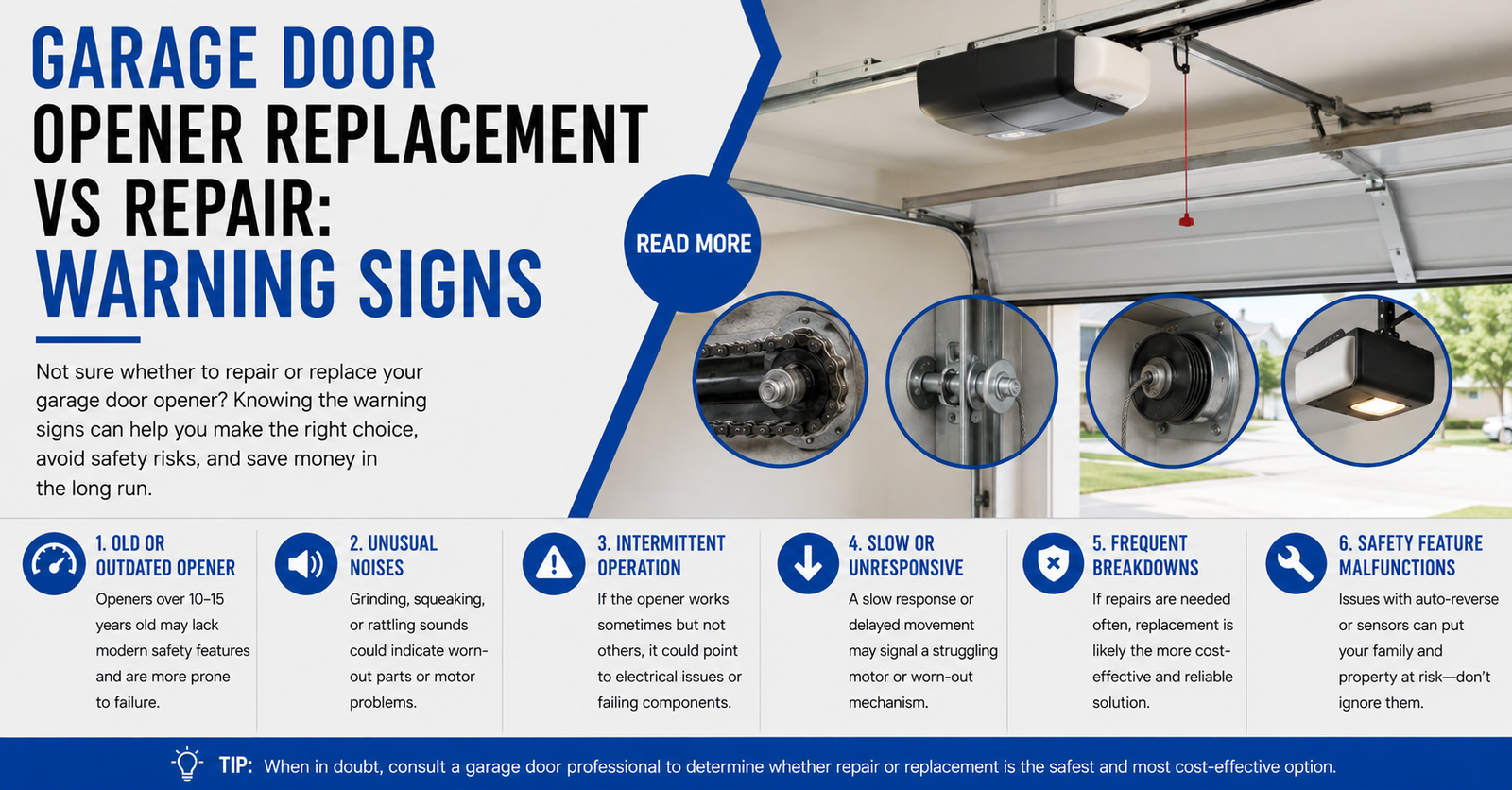
Garage Door Opener Problems
Sometimes the problem isn’t the garage door itself.
A failing garage door opener may:
- Struggle lifting the door
- Stop midway
- Produce unusual noises
- Move slowly
If the opener has recently become weaker, the underlying cause may actually be worn springs or an unbalanced door rather than the motor itself.
Learn more about professional Garage Door Opener services:
Why You Should Never Force a Heavy Garage Door
Many homeowners try to force the garage door open.
Unfortunately, this often creates larger problems.
Forcing the door can cause:
- Broken hinges
- Damaged rollers
- Bent tracks
- Burned-out opener motor
- Snapped cables
- Serious personal injuries
A heavy garage door usually indicates an underlying mechanical issue that should be repaired rather than ignored.
Warning Signs That Require Immediate Garage Door Repair
Don’t wait until the garage door completely fails.
Call a professional if you notice:
- Door suddenly feels heavier
- Loud popping sounds
- Broken torsion spring
- Crooked garage door
- Slow manual operation
- Grinding or squeaking noises
- Door won’t stay open halfway
- Opener struggles lifting the door
Early repairs often prevent more expensive replacements later.
How Garage Door Professionals Diagnose the Problem
Experienced technicians perform a complete inspection before recommending repairs.
They typically check:
- Spring tension
- Door balance
- Lift cables
- Rollers
- Hinges
- Tracks
- Bearings
- Garage door opener
- Safety sensors
This thorough inspection ensures the real cause is repaired instead of simply treating the symptoms.
Tips to Prevent a Heavy Garage Door
Routine maintenance helps prevent unexpected failures.
Homeowners should:
- Lubricate rollers and hinges every few months
- Keep tracks clean
- Inspect cables for fraying
- Listen for unusual noises
- Test door balance monthly
- Schedule annual professional maintenance
Preventive maintenance extends the lifespan of your entire garage door system.
When It’s Time to Replace Instead of Repair
Sometimes replacing worn components is more cost-effective than repeated repairs.
Replacement may be recommended when:
- Springs have reached the end of their lifespan
- Multiple hardware components are worn
- The opener frequently fails
- Repair costs continue increasing
- The garage door system is over 15–20 years old
A professional inspection helps determine the safest and most economical solution.
Trust DFW Affordable Garage Door for Reliable Garage Door Repairs
A garage door that feels unusually heavy should never be ignored. Whether the issue is caused by broken springs, worn cables, damaged rollers, or an unbalanced system, prompt repairs can restore smooth operation and help prevent costly damage. At DFW Affordable Garage Door, our experienced technicians provide professional inspections, accurate diagnostics, and dependable repair services to keep your garage door operating safely and efficiently.
Frequently Asked Questions (FAQs)
How heavy should a garage door feel when opening manually?
A properly balanced garage door should feel relatively light and easy to lift by hand. If it feels unusually heavy, it often indicates problems with the springs, cables, or other lifting components.
Why does my garage door suddenly feel heavier than before?
A garage door can suddenly become heavy due to a broken torsion spring, worn extension springs, damaged lift cables, or an unbalanced door. These issues reduce the system’s ability to support the door’s weight.
Can I open a heavy garage door by myself?
While it may be possible, it is not recommended. Forcing a heavy garage door open can cause additional damage to the hardware and increase the risk of personal injury.
Does a broken garage door spring make the door heavy?
Yes. The springs are designed to carry most of the door’s weight. When a spring breaks, the full weight of the garage door must be lifted manually, making it feel extremely heavy.
How can I tell if my garage door is out of balance?
Disconnect the garage door opener using the emergency release cord and lift the door halfway. If it falls, rises on its own, or doesn’t stay in place, the door is likely out of balance and should be inspected by a professional.
Can a faulty garage door opener make the door feel heavy?
A malfunctioning garage door opener can make opening the door more difficult when using the motor, but if the door feels heavy during manual operation, the issue is usually related to the springs, cables, rollers, or door balance.
When should I call a professional garage door technician?
You should contact a professional if your garage door feels unusually heavy, makes loud noises, has broken springs or cables, opens unevenly, or refuses to stay balanced. Prompt repairs help prevent further damage and improve safety.
Conclusion
A garage door that feels heavy when opening manually is more than just an inconvenience—it is often a warning sign that something within the system needs attention. Problems such as broken springs, worn cables, damaged rollers, or an unbalanced door can make daily operation difficult while increasing the risk of costly repairs and safety hazards. Identifying these issues early and scheduling professional service can help restore smooth operation, extend the lifespan of your garage door, and protect your home. If your garage door has become difficult to lift, trust DFW Affordable Garage Door for reliable inspections, expert repairs, and dependable solutions that keep your garage door operating safely and efficiently.