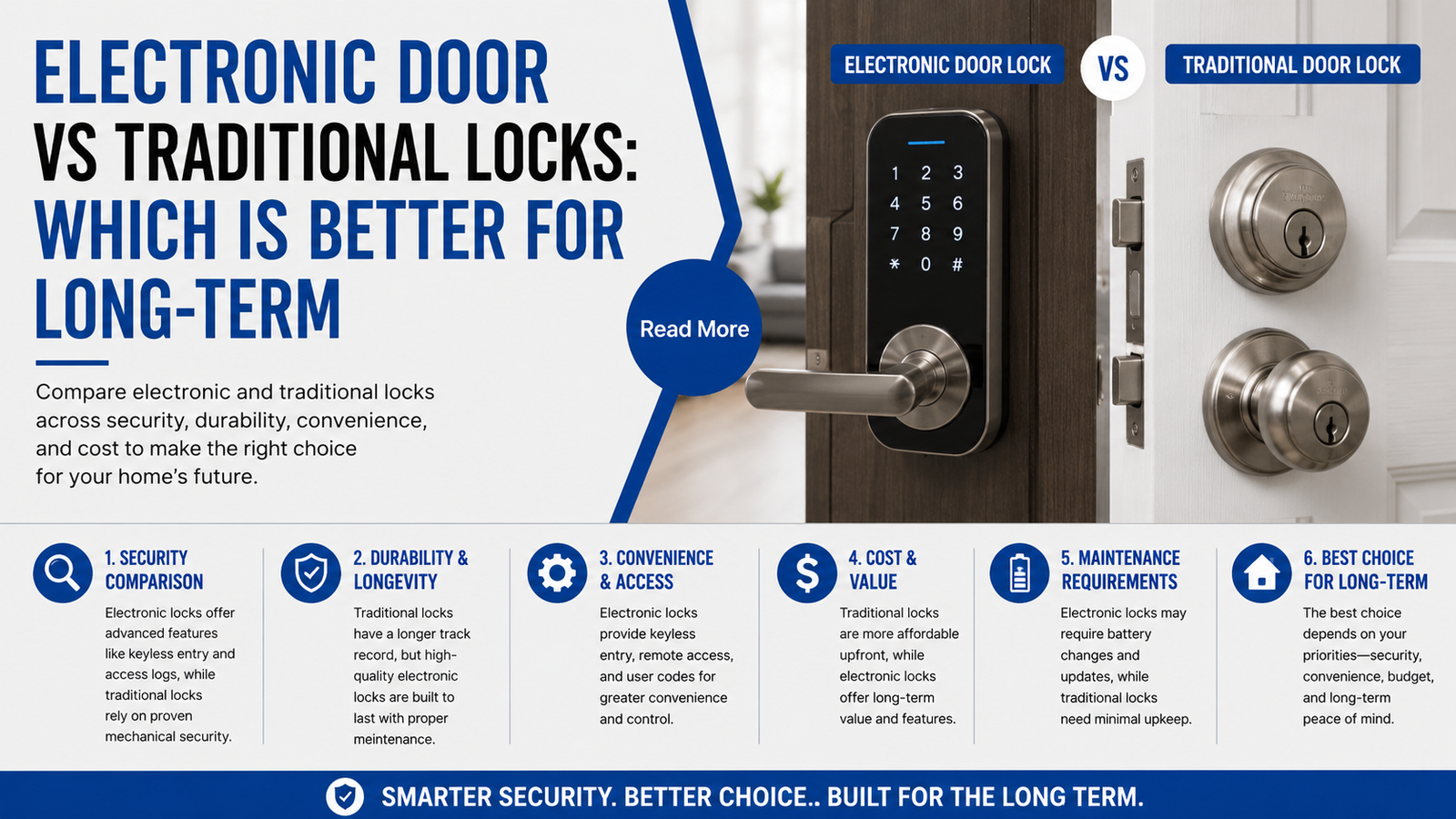

The debate around Electronic Door vs Traditional Locks has become central to modern home security planning. Homeowners today are not just choosing between a key and a keypad they are deciding between mechanical reliability and smart home automation. While electronic door locks promise convenience through keyless access, biometric authentication, and mobile app control, traditional locks continue to dominate in durability and simplicity.
However, choosing the right system is not only about technology it is about installation quality, environmental conditions, and long-term maintenance. In many cases, improper setup leads to security failures, which is why professional support from experts like DFW Affordable Garage Door becomes essential for residential protection.
For emergency breakdowns or urgent access issues, homeowners often rely on fast-response services like 24-hour emergency repair, especially when locking systems fail unexpectedly.
Understanding Electronic Door Locks vs Traditional Locks
To make an informed decision, you must understand how both systems operate at a structural level.
Traditional Door Locks (Mechanical Systems)
- Operate using physical keys and internal pin tumbler mechanisms
- Include deadbolts, knob locks, and lever locks
- Require no electricity or internet connection
- Depend fully on mechanical alignment and material strength
Electronic Door Locks (Smart Systems)
- Use PIN codes, fingerprint scanning, or mobile apps
- May include Bluetooth or Wi-Fi smart connectivity
- Support remote lock control and access logs
- Often integrated into smart home security systems
Modern systems may include digital door locks, fingerprint door locks, and Wi-Fi smart locks, which improve convenience but introduce new technical risks.
What Causes Failures in Modern Door Lock Systems?
Both electronic and traditional locks fail for predictable reasons. Most homeowners assume lock failure is random, but in reality, it is almost always due to installation or maintenance issues.
- Misaligned strike plates reducing deadbolt engagement
- Low-quality lock cylinders prone to wear
- Battery depletion in electronic locks
- Software bugs in smart lock firmware
- Poor Wi-Fi signals affecting remote access
- Door frame shifting due to temperature or humidity
Even a small misalignment can compromise unauthorized access prevention, making your home significantly less secure.
DIY Installation: What Homeowners Try
Many homeowners attempt DIY installation of keyless entry systems or traditional locks to reduce cost. While tutorials make it appear simple, real-world installation requires precision tools and structural understanding.
Common DIY methods include:
- Replacing old locks with smart locks using basic screwdriver kits
- Installing PIN code entry systems on wooden doors
- Adding Bluetooth-enabled smart locks with mobile apps
- Upgrading traditional deadbolts without door reinforcement
According to general discussions on Wikipedia lock systems, mechanical locking systems rely heavily on precise alignment, something DIY installations often fail to achieve.
Why DIY Smart Lock Installation Fails More Often Than Expected
While DIY installation seems cost-effective, it often results in long-term security weaknesses. The issue is not the lock itself it is the incorrect setup.
Key failure points include:
- Incorrect calibration of fingerprint or biometric authentication
- Weak encryption setup in Wi-Fi-enabled locks
- Improper torque tightening causing internal damage
- Battery contact issues leading to sudden lockouts
- Failure to sync mobile app access properly
Homeowners often underestimate how sensitive modern door locking systems are to installation accuracy. Even a 2–3 mm misalignment can cause long-term failure.
Real user experiences on Reddit smart lock issues highlight repeated problems with connectivity, battery failure, and lockouts.
Security Risks of Electronic Door Locks
Although electronic door locks offer advanced convenience, they introduce risks that traditional locks do not have.
- Cybersecurity threats: Wi-Fi smart locks can be vulnerable if not encrypted properly
- Power dependency: Battery failure can cause complete access loss
- Software glitches: Firmware bugs may lock or unlock doors incorrectly
- Signal failure: Bluetooth or Wi-Fi interruptions affect remote access
Discussions on Quora smart lock safety often show divided opinions highlighting convenience on one side and reliability concerns on the other.
When You Should Call a Professional Instead of DIY
Professional installation is not just about convenience—it is about preventing long-term security failure.
- Door does not align with frame or latch properly
- Smart lock fails to connect to Wi-Fi or mobile app
- Fingerprint or PIN entry becomes inconsistent
- Deadbolt does not fully extend or retract
- Frequent lock jams or resistance during operation
- Signs of forced entry or hardware weakening
These issues often require structural correction, not just surface-level fixes.
Why Choose DFW Affordable Garage Door
At DFW Affordable Garage Door, we focus on precision-driven installation and repair for both traditional and electronic locking systems. Our approach ensures long-term safety rather than temporary fixes.
- Advanced installation of smart and mechanical locks
- Secure setup of keyless access systems
- Proper alignment for maximum deadbolt strength
- Diagnosis of electronic lock failures and connectivity issues
- Emergency repair support for residential security systems
We also provide full-service support for related home entry systems including garage door repair, installation services, and preventive maintenance.
Electronic Door vs Traditional Locks: Final Expert Comparison
- Electronic locks: Best for convenience, remote access, and smart home integration
- Traditional locks: Best for reliability, durability, and zero-power dependency
- Professional insight: Hybrid systems offer the strongest residential protection
In real-world conditions, the strongest security strategy is not choosing one over the other it is combining both systems with professional installation and reinforcement.
FAQs
Which lock is more secure overall?
Both can be secure if installed correctly. Traditional locks provide physical strength, while electronic locks offer smart control and monitoring features.
Do smart locks work without internet?
Yes, most smart locks function locally via Bluetooth or PIN codes, but remote access requires internet connectivity.
What happens if a smart lock battery dies?
Most systems include backup keys or emergency power ports, but failure can still cause temporary lockouts.
Are traditional locks outdated?
No, mechanical locks remain one of the most reliable forms of physical security when properly installed.
Final Conclusion
The comparison of Electronic Door vs Traditional Locks ultimately comes down to how and where each system is used. Electronic locks offer modern convenience through keyless entry systems, biometric authentication, and remote control, while traditional locks remain unmatched in mechanical durability and simplicity.
However, most security failures occur not because of the lock type but because of improper installation or lack of maintenance. Whether upgrading to smart locks or reinforcing traditional systems, professional installation ensures your home remains protected against unauthorized access.
For homeowners who want long-term reliability, expert evaluation and installation from DFW Affordable Garage Door ensures your residential security system is built correctly from the start.
Secure your home the right way choose expert installation and avoid costly security failures later.