

If you’ve woken up to a garage door that won’t budge, hangs crooked, or slammed shut with a bang, there’s a good chance a broken or frayed cable is the culprit. Understanding the garage door cable repair cost in Dallas TX before you call a technician puts you in control you won’t be caught off guard by an invoice you didn’t expect, and you’ll know exactly what questions to ask.
At DFW Affordable Garage Door, we believe in full transparency. This guide walks you through real local pricing, what drives costs up or down, when a DIY approach crosses the line into dangerous territory, and why fast professional action is almost always the smarter and cheaper long-term play.
What Are Garage Door Cables and Why Do They Fail?
Garage door cables are high-tension steel wires that work alongside the garage door spring system to bear the full weight of the door every single time it opens and closes. On a standard residential garage door in the Dallas area, that door can weigh anywhere from 150 to 400 pounds depending on material and insulation. The cables translate the stored energy of the springs into smooth, controlled motion so the door operates evenly on both sides.
There are two primary cable configurations found on residential garage doors:
- Torsion spring cables These wrap around a garage door drum mounted on the torsion bar above the door opening. As the spring cables wind and unwind, they lift or lower the door in tandem.
- Extension spring cables These run along the horizontal track on either side of the door, connecting to the extension springs via pulleys. When the door operates, these cables stretch and retract with the springs.
So why do garage door cables fail? The short answer: constant mechanical stress and the Texas climate don’t make great partners. Here’s what causes the most damage:
- Normal wear and cycle fatigue Most residential cables are rated for 10,000 to 15,000 cycles. If you open and close your door four times a day, that’s roughly 1,400 cycles per year. After seven to ten years, the wire strands begin to fatigue and fray.
- Sudden garage door spring failure When a torsion or extension spring snaps, the full dead weight of the door shifts instantly to the cables. The cable drum and the cables themselves frequently suffer damage in the same event. If you’ve heard a loud bang from your garage, read our breakdown on broken spring symptoms cable damage often follows.
- Corrosion Dallas County summers bring humidity spikes that accelerate rust on steel cables, especially in uninsulated garages or older homes where moisture accumulates on the floor and walls.
- Cable drum wear The grooves in the drum can wear unevenly over time, causing the cable to slip off track or fray where it contacts the drum edge.
- Poor initial installation Cables that were installed with the wrong diameter, wrong length, or improperly seated in the drum grooves will fail earlier than they should.
- Accidental impact A car bumper nudging the door while it’s in motion, or an object getting caught during opening and closing, can kink or snap a cable instantly.
Regardless of the root cause, a failed cable means the garage door system is compromised. The door will either refuse to move, move erratically, or most dangerously drop unevenly. Even if the garage door opener still runs, a broken cable means the door may not respond the way you expect. If your opener motor is running but nothing is happening, that’s often a cable or spring problem explore more about that in our guide on why your opener runs but the door won’t move.
Garage Door Cable Repair Cost in Dallas TX: A Real Breakdown
Pricing for cable repairs in the Dallas–Fort Worth area varies based on several factors we’ll explain in detail below. But before you can make an informed decision, you need a realistic baseline. Here are the typical cost ranges you’ll encounter when calling local garage door repair services:
Standard Cable Replacement (Both Sides)
Most reputable companies replace cables in pairs because the second cable is already under similar stress. Replacing one and leaving the other is a short-term fix waiting to become another service call. In Dallas County, expect to pay between $150 and $250 for a standard dual-cable replacement on a single-car garage door, including parts and labor.
Cable + Spring Replacement (Combined Service)
Because a broken spring is the most common cause of cable failure, many calls result in a combined spring and cable replacement. This bundled service typically runs between $200 and $400 for a single-car door and $250 to $550 for a double-car door. Having both components replaced at the same time is almost always more cost-effective than scheduling two separate visits.
Garage Door Drum Replacement
Garage door drum replacement in Dallas adds to the repair cost when the cable drum is cracked, grooved, or bent. A replacement drum runs between $75 and $150 per drum, installed. Most doors have two drums — one on each end of the torsion bar. If the drum is damaged, replacing the cable without addressing the drum is a temporary repair at best.
Emergency or After-Hours Repair
Emergency calls outside of normal business hours carry a premium, typically an additional $50 to $100 above standard rates. If you’re facing a door that won’t close with rain coming in or a car trapped inside, that premium is usually worth every cent. DFW Affordable Garage Door offers 24-hour garage door repair across the Dallas area — including nights, weekends, and holidays.
Cost of Replacing Garage Door Cables (Summary Table)
| Service | Estimated Cost (Dallas TX) |
| Cable Replacement Only (both sides, single-car door) | $150 – $250 |
| Cable Replacement (both sides, double-car door) | $200 – $350 |
| Cable + Spring Replacement (single-car door) | $200 – $400 |
| Cable + Spring Replacement (double-car door) | $250 – $550 |
| Drum Replacement (per drum, installed) | $75 – $150 |
| Emergency / After-Hours Premium | +$50 – $100 |
| Service Call / Diagnostic Fee | $50 – $85 (often waived with repair) |
Note: Prices reflect typical Dallas County market rates as of 2025. Costs vary based on door type, weight, brand, and specific labor requirements. Always request an itemized quote before authorizing any work.
What Factors Affect the Cost to Repair Garage Door Cables?
Two homeowners can call the same company for a “cable repair” and get invoices that look very different. Here’s why:
Door Size and Weight
A standard single-car steel door requires lighter-gauge cables than a heavy double-car wood or carriage-style door. Larger, heavier doors require thicker cables, heavier-duty drums, and higher-tension springs all of which increase material costs. In upscale Dallas neighborhoods, custom wood doors and oversized double doors are common, and their hardware commands a premium price.
Type of Spring System
Torsion spring systems are more complex to work on safely than extension spring systems. Releasing and re-tensioning a torsion spring requires specialized winding bars and a clear understanding of torque calculations. Labor costs are typically higher for torsion spring cable replacements, but torsion systems are also more reliable long-term.
Condition of Other Components
If a technician arrives to replace your cables and finds that the rollers, tracks, or pulleys are also worn, a responsible company will recommend addressing those components at the same visit. Catching multiple issues in one service call saves you money on labor compared to separate visits. Our team always performs a comprehensive inspection before beginning any cable repair service so there are no surprise callbacks.
Brand and Availability of Parts
Proprietary systems from brands like Wayne Dalton or Clopay sometimes require specific parts that cost more than generic equivalents. If your garage door system uses non-standard hardware, parts cost can increase your total repair bill by $40 to $100 or more.
Labor Rates in Your Area
Dallas County spans a large geographic area. Labor rates in Frisco, Highland Park, and University Park may trend slightly higher than in outer suburbs, reflecting both local cost-of-living differences and demand for experienced technicians in higher-end markets.
Can You DIY Garage Door Cable Repair? Here’s the Honest Answer
Every week, homeowners across Dallas County search for how to replace garage door cables themselves. The information is widely available online, and the parts are inexpensive. On the surface, it looks like a money-saving opportunity. In practice, it’s one of the most consistently dangerous DIY home repair tasks a homeowner can attempt — and the risk is not theoretical.
What DIY Guides Tell You
Most step-by-step cable replacement guides walk you through disconnecting the garage door opener, pulling the emergency release cord, manually lifting the door to release spring tension, and then feeding the new cable through the drum or pulley system. The guides make it sound methodical and manageable.
The catch? Those guides are written with the assumption that the spring system is intact and properly tensioned. In the real world, if the spring cables failed because a garage door spring snapped, you’re now working on a door held up by nothing but the track, and a single slip can send hundreds of pounds of door crashing down.
Why DIY Cable Repair Fails
- Spring tension is lethal if mishandled. A standard torsion spring stores enough energy to cause catastrophic injury if it releases without control. A published study in Ophthalmic Surgery, Lasers and Imaging Retina (available via PubMed / NIH) documented seven patients who suffered open globe eye injuries some resulting in total vision loss while attempting DIY garage door spring repairs. These were not careless people; they were homeowners trying to save money on a repair that exceeded their tools and training.
- The wrong cable size creates immediate failure risk. Cables are rated by diameter (typically 1/8″ or 3/32″ for residential doors) and wire construction. Using a cable that is too thin for the door’s weight will snap under load, potentially while the door is in motion.
- Drum winding requires precision tools. Torsion spring cables must be wound onto the drum with exactly the right number of turns to balance the door. Off by even one full turn and the door will open unevenly, placing asymmetric stress on the track, rollers, and opener. Attempting to wind the drum with a screwdriver instead of proper winding bars is one of the leading causes of spring projectile injuries.
- You likely won’t catch the underlying cause. A frayed cable is rarely the whole story. The drum may be grooved, a pulley may be seized, or the spring may be nearing the end of its cycle life. A professional technician inspects the entire garage door system — not just the part you can see. Skipping this diagnostic step means you’re patching the surface while the real problem continues to develop.
- The risk of door collapse is real and immediate. The U.S. Consumer Product Safety Commission has documented tens of thousands of garage door-related injuries annually in the U.S. Many of these incidents involve doors that failed during or after improper repairs — not just original mechanical failures.
There is nothing wrong with being informed. Knowing how your garage door system works makes you a better customer and helps you ask the right questions. But when it comes to actually replacing cables under spring tension, the most informed decision you can make is to call a professional.
Signs Your Garage Door Cables Need Professional Attention — Right Now
Not every cable problem starts with a dramatic failure. Many develop gradually, giving you warning signs well before the system gives out completely. The problem is that most homeowners don’t know what to look for. Here’s what demands an immediate call to a garage door service professional:
1. The Door Hangs Crooked or One Side Drops Lower
When a cable loses tension or snaps on one side, the door can no longer be supported evenly. You’ll see a visible tilt when the door is in motion or at rest. This imbalance strains the opener, bends the track, and can cause the door to jump off the rollers entirely during the next operation cycle.
2. You Hear Snapping, Popping, or Grinding Noises
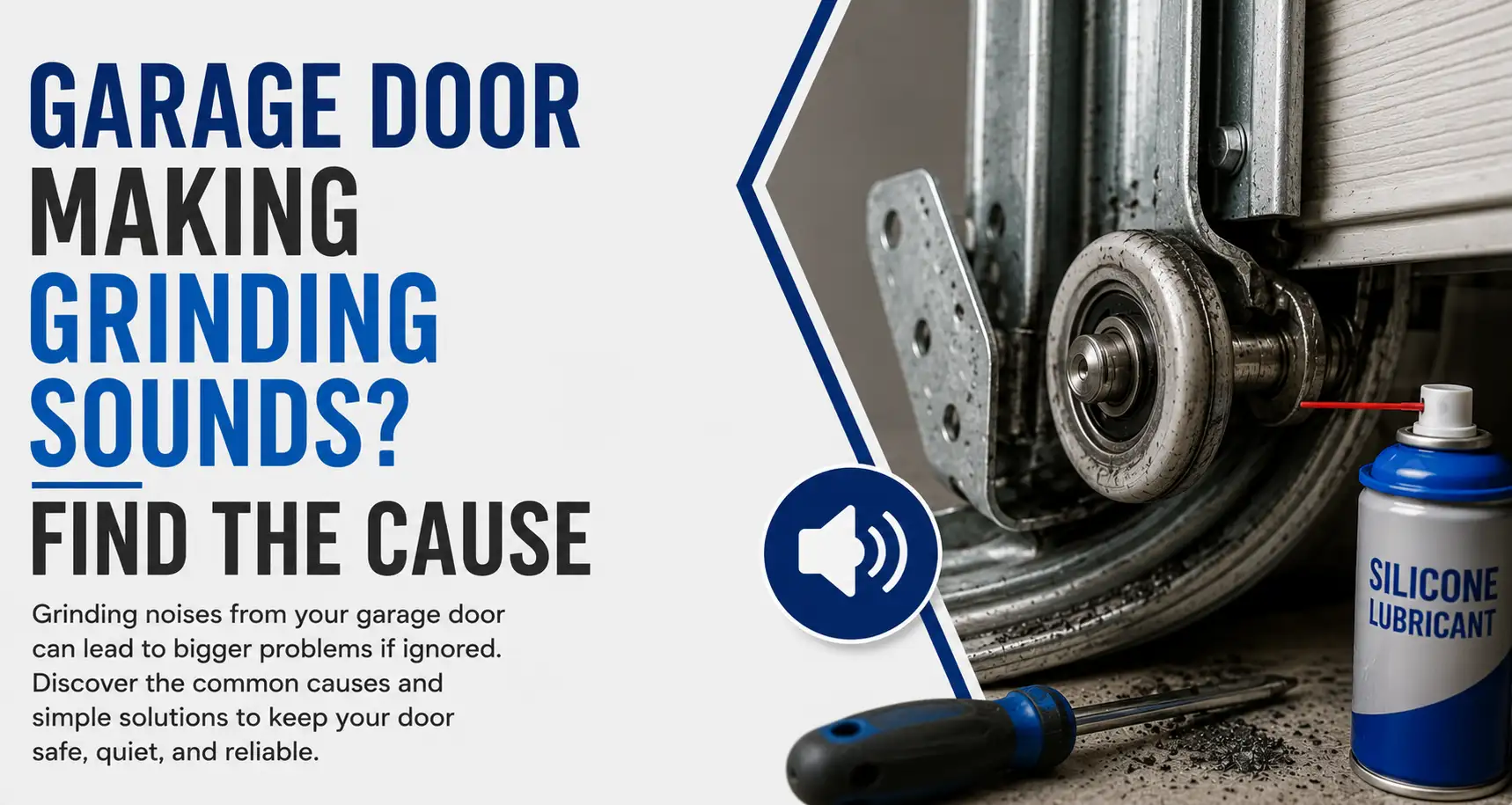
A sudden loud bang — particularly one that sounds like a gunshot from the garage — is almost always a spring or cable snapping under tension. Don’t operate the door after this sound. Continuing to run the opener can cause the door to collapse, damage the opener motor, or bend the track out of alignment. Our guide on garage door noise causes covers what different sounds mean and which ones require urgent service.
3. Cables Are Visibly Frayed, Kinked, or Loose
Take a moment to visually inspect the cables along both sides of the door. Healthy cables are taut and straight. Frayed wires, visible kinks, rust spots, or slack loops are all signs of imminent failure. A cable with even a few broken wire strands has lost a significant percentage of its load-bearing capacity.
4. The Door Won’t Close All the Way
A partially open door that refuses to travel to the floor can indicate a cable that has slipped off the drum or lost proper tension. This is also a common symptom of a track misalignment that resulted from cable imbalance. See our detailed breakdown of why your door won’t close all the way.
5. The Opener Strains But the Door Moves Slowly
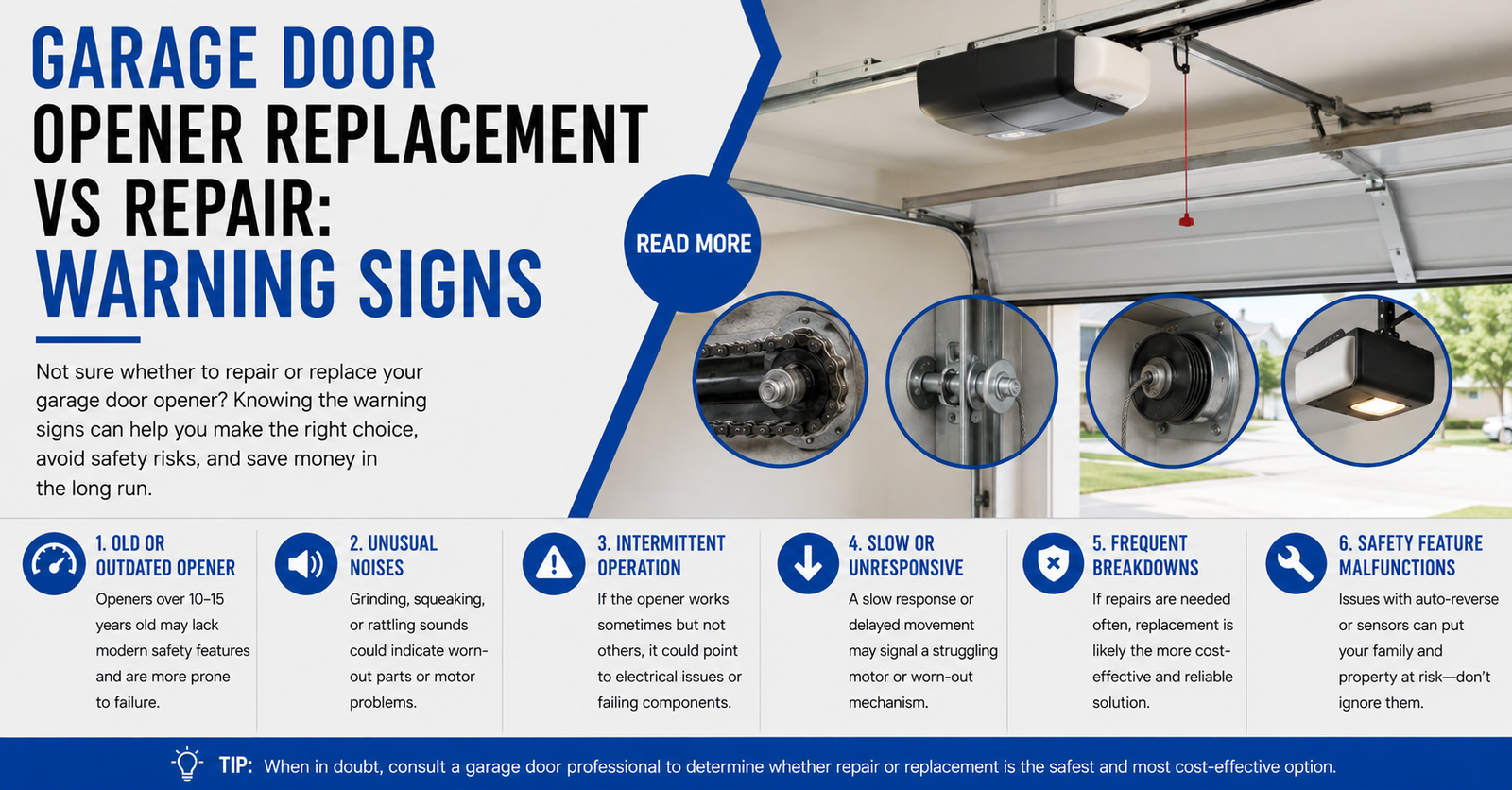
If your garage door opener is working harder than usual — running louder, moving the door more slowly, or reversing mid-cycle — the door is likely out of balance due to a cable or spring issue. Continuing to operate a strained opener will burn out the motor and add an opener replacement to your repair bill.
6. The Cable Has Come Off the Drum
You may be able to see that the cable has unwound from the drum and is lying slack on the floor or coiled against the wall. This door is completely unsupported on that side and should not be operated under any circumstances until the cable is re-wound and properly tensioned by a technician.
Garage Door Cable Repair in Dallas County: What the Service Includes
When you call DFW Affordable Garage Door for a cable repair in Dallas County, the service is not just about swapping one component. A complete, professional cable repair includes:
- Full visual and mechanical inspection of the entire garage door system before any work begins
- Removal of the damaged or broken cable(s) from both sides of the door
- Inspection and, if necessary, replacement of the cable drum(s)
- Installation of properly sized and rated replacement cables
- Re-tensioning of the spring system to the correct torque specification for your door’s weight
- Balance test door should hold position at the halfway point without drifting up or down
- Force adjustment and safety reversal test on the opener
- Full operational test the door opens and closes smoothly through multiple cycles before the technician leaves
- Written invoice with itemized parts and labor — no vague line items
If the diagnosis reveals that additional components rollers, a track section, or the opener — also need attention, your technician will walk you through those findings clearly and provide a separate quote. You decide what gets done. There is no pressure and no inflated scare tactics.
Why Dallas Homeowners Choose DFW Affordable Garage Door
There’s no shortage of garage door companies serving the Dallas–Fort Worth area. Here’s what sets DFW Affordable Garage Door apart and why homeowners from Plano to Fort Worth keep calling us back:
Local Expertise — Not a Call Center
When you call us, you’re speaking to someone who knows Dallas County streets, knows which neighborhoods have older door systems that need more careful handling, and dispatches technicians who are already in your area. We are not a national franchise with a call center routing your job to whoever is available. We are a local team, locally accountable.
Transparent, Flat-Rate Pricing
The cost to repair garage door cables should never feel like a guessing game. We quote specific prices before the work begins — not “we’ll see what it takes once we’re inside.” If the scope of work changes, we discuss it with you before we proceed. Period.
Same-Day and Emergency Response
A broken cable is not a problem you can schedule for next week. Your car may be trapped, your home may be unsecured, and a door hanging on one cable is a physical hazard. We offer same-day appointments across Dallas County and true emergency garage door service around the clock.
Warranty-Backed Work
Every cable replacement and spring service we perform is backed by a warranty on both parts and labor. If something fails within the warranty period, we come back and fix it — no arguments, no service call fee. The International Door Association recognizes that professional certification and warranty-backed service are hallmarks of trustworthy dealers — standards our team upholds on every call.
We Service All of Dallas County and the Surrounding Communities
Whether you’re in the heart of Dallas, in the upscale homes of Highland Park or University Park, in the suburbs of Plano, Frisco, or Richardson, or further out in Fort Worth, our technicians are ready to serve you.
Complete Garage Door Services — One Company
Our services include everything your garage door needs under one roof: cable and spring repair, opener repairs and installation, track alignment, roller replacement, panel repair, routine garage door maintenance, and full new door installation. You’ll never need a second company for a different component.
How to Prevent Expensive Cable Repairs in the Future
The best cable repair is the one you never need. A handful of simple habits can extend the life of your cables significantly and catch problems before they become emergencies:
- Annual professional inspection: A professional door inspection once a year lets a technician spot fraying cables, worn drums, or low-tension springs while they’re still manageable — not after they’ve failed.
- Lubricate moving parts regularly: Use a silicone-based spray or white lithium grease on the rollers, hinges, and springs every six months. Never use WD-40 on springs — it strips the protective coating and accelerates corrosion.
- Test the door’s balance manually: With the opener disconnected (pull the red emergency release cord), lift the door manually to about waist height and let go. A properly balanced door should hold its position without drifting up or crashing down. If it drifts, the spring tension needs adjustment.
- Visually inspect cables monthly: A 30-second look at each cable takes no training — you’re just checking for fraying, rust, or unusual slack. Catching a frayed cable before it breaks saves you the emergency call premium and prevents collateral damage to the track and opener.
- Don’t ignore unusual noises: A door that has started squeaking, grinding, or clicking is telling you something. Address it early. A noise that costs $80 to fix today can become a $400 repair if ignored for six more months.
Frequently Asked Questions About Garage Door Cable Repair Cost in Dallas TX
How much does it cost to replace garage door cables in Dallas TX?
In the Dallas area, the cost to replace garage door cables typically ranges from $150 to $350 for a standard residential door, with both cables replaced at the same time. The final price depends on door size, spring type, and whether other components like drums or springs also need replacement during the same visit.
Is it necessary to replace both cables at the same time?
Yes. When one cable fails, the other has experienced the same amount of wear and stress over the same period. Replacing only one creates an imbalance in the garage door system and typically results in the second cable failing within weeks or months. Replacing both at once saves you money on a second service call.
How do I know if my garage door has a broken cable vs. a broken spring?
Both produce similar symptoms — a door that won’t open or operates crookedly. However, a broken spring often causes a loud bang and leaves the door unable to lift at all, while a broken cable may allow partial movement on one side. A technician can diagnose both during a single inspection visit and provide one combined quote if multiple components are affected.
How long does a garage door cable replacement take?
A standard cable replacement on a single-car door typically takes 45 minutes to 90 minutes when performed by an experienced technician. If drum replacement or spring replacement is needed at the same time, expect the job to take between 90 minutes and two hours. We never rush a repair — proper tensioning and balancing take the time they take.
Can I replace garage door cables myself to save money?
While DIY guides exist, cable replacement involves working directly with high-tension springs that can release violently if mishandled. Medical literature documents cases of severe eye injuries and other trauma from DIY spring and cable repairs. The cost savings rarely justify the injury risk — and a technician’s service call is far less expensive than an emergency room visit.
How often should garage door cables be replaced in Dallas TX?
Well-maintained cables on a standard residential door typically last 7 to 10 years under normal use. Dallas-area humidity and heat can accelerate wear, particularly on steel cables in uninsulated garages. Annual professional inspections are the most reliable way to catch deteriorating cables before they fail unexpectedly.
Does replacing garage door cables void my opener’s warranty?
Not if the cables are replaced correctly. What can damage or void an opener warranty is running the opener repeatedly when the door is out of balance — exactly what happens when a broken or improperly installed cable creates uneven load. A proper cable replacement done by a licensed technician protects both the door and the opener.
What is included in garage door drum replacement in Dallas?
Garage door drum replacement in Dallas typically includes removing the old drum from the torsion bar, installing a replacement drum sized to match the spring and cable specifications, and re-winding the cable with the correct amount of tension. Drum replacement is usually combined with cable replacement when the drum grooves are visibly worn or the drum is cracked.
Ready to Get Your Garage Door Cables Fixed the Right Way?
A broken cable is not a problem that gets better with time. Left unaddressed, it puts unnecessary strain on your garage door openers, bends the track, and exposes your home to an unsecured entry point. The longer a damaged cable operates, the higher your final repair bill is likely to be.
DFW Affordable Garage Door serves Dallas County and the entire DFW metro with honest pricing, same-day availability, and technicians who explain every step of the repair before they begin. Whether you need a standard cable replacement, a full spring and cable service, or a garage door drum replacement in Dallas, we’ve got the experience and the parts to do it correctly the first time.
Don’t let a broken cable turn into a collapsed door. Call DFW Affordable Garage Door today, or visit our garage door repair services page to schedule your appointment. Same-day service is available throughout Dallas County including nights and weekends.