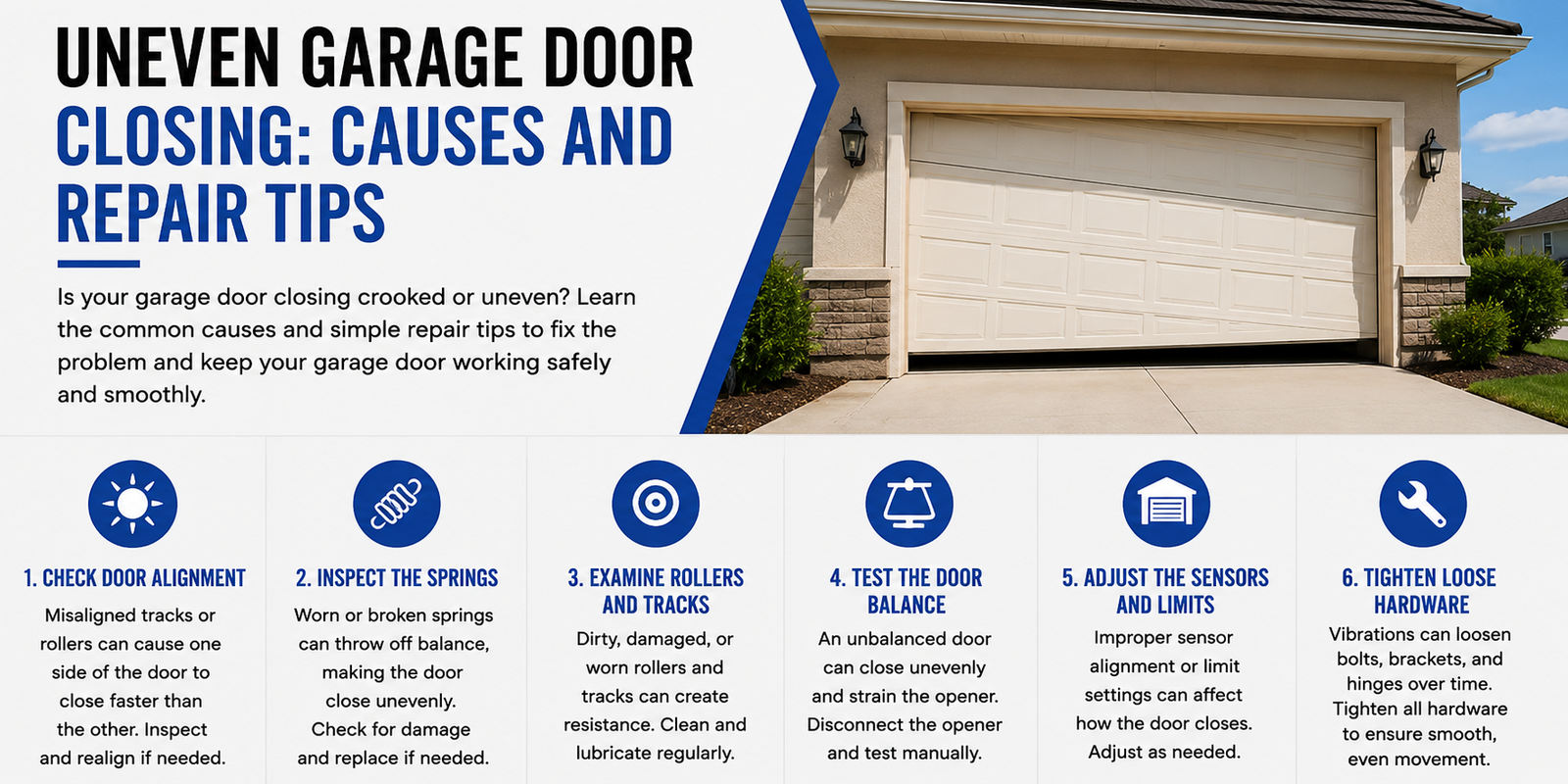

A garage door should close smoothly and evenly every time you use it. If one side touches the ground before the other, the door appears crooked, or you notice gaps along the bottom after it closes, it’s a sign that something within the garage door system isn’t working correctly. Ignoring an uneven garage door can place extra strain on the opener, springs, cables, and tracks, eventually leading to more expensive repairs or even complete system failure. Understanding Why Is My Garage Door Uneven When Closing? helps homeowners identify early warning signs and know when professional service is needed.
Many homeowners rely on DFW Affordable Garage Door for professional inspections, maintenance, and repairs. Experienced technicians can quickly identify whether the problem involves springs, cables, tracks, rollers, or the opener before minor issues develop into major mechanical failures.
If your garage door begins closing unevenly, making unusual noises, or leaving gaps along the floor, scheduling professional Garage Door Repair is the safest solution. Technicians inspect every major component to restore proper balance and smooth operation. In some cases, an aging or malfunctioning Garage Door Opener may also contribute to uneven movement and should be evaluated as part of the inspection.
Before choosing a repair company, many homeowners also review DFW Affordable Garage Door Reviews to learn about customer experiences and completed repair projects.
Why an Even Garage Door Matters
A properly balanced garage door distributes its weight evenly across both sides of the lifting system. When every component is functioning correctly, the door travels smoothly along the tracks and seals evenly against the floor when closed.
An uneven garage door often indicates a mechanical imbalance caused by worn or damaged components. Continuing to operate the door without correcting the problem can increase wear on the opener, cables, springs, and rollers while creating potential safety hazards.
According to Garage door information, garage doors rely on balanced spring systems, lift cables, rollers, and tracks working together to ensure safe and reliable operation. Problems affecting any of these components can cause uneven movement or improper closing.
Broken or Stretched Garage Door Cables
One of the most common causes of an uneven garage door is a damaged lift cable.
Garage door cables work together with the springs to raise and lower the door evenly. If one cable becomes stretched, frayed, loose, or breaks completely, one side of the garage door may begin moving differently than the other.
Common warning signs include:
- One side closes faster than the other.
- The garage door appears tilted.
- Loose or hanging cables.
- Jerky movement while closing.
- Unusual grinding or popping noises.
Since garage door cables operate under high tension, they should always be repaired or replaced by trained professionals.
Worn or Broken Garage Door Repair
Garage door repair counterbalance the weight of the door, making it possible to lift and lower safely.
If one spring weakens or breaks, the lifting force becomes uneven. This imbalance often causes one side of the door to drop lower than the other during operation.
Additional symptoms may include:
- The garage door feels unusually heavy.
- Slow opening or closing.
- Loud bang from the garage.
- The opener struggles to lift the door.
- Crooked movement while closing.
Spring replacement should never be attempted without proper equipment because of the extreme tension stored inside the springs.
Misaligned or Damaged Tracks
Garage door tracks guide the rollers as the door moves.
Over time, accidental impacts, loose mounting brackets, or normal wear can cause the tracks to shift out of alignment.
When this happens, the rollers cannot move smoothly, causing one side of the garage door to travel differently from the other.
During an inspection, technicians look for:
- Bent track sections
- Loose mounting hardware
- Gaps between rollers and tracks
- Rust buildup
- Obstructions inside the track
Correcting track alignment restores smooth and even garage door operation.
Worn or Damaged Rollers
Garage door rollers experience constant movement every time the door opens and closes.
As they wear out, rollers may crack, flatten, or stop rotating properly. When one or more rollers fail, the garage door may begin binding or moving unevenly.
Replacing worn rollers improves:
- Smooth operation
- Noise reduction
- Proper alignment
- Overall system performance
Routine inspections help identify worn rollers before they begin affecting other components.
Garage Door Has Become Unbalanced
Sometimes the problem isn’t a single damaged part but the overall balance of the garage door.
Normal wear gradually changes spring tension, allowing one side of the system to lift differently than the other.
An unbalanced garage door places excessive strain on:
- Garage door opener
- Springs
- Cables
- Hinges
- Rollers
Professional balance adjustments help restore proper operation while extending the lifespan of the entire garage door system.
Garage Door Opener Problems
Although mechanical components are usually responsible, the garage door opener can sometimes contribute to uneven closing.
A failing opener may struggle to maintain consistent movement, especially if the door has already become partially unbalanced.
Professional technicians inspect:
- Motor performance
- Travel limits
- Force settings
- Drive system
- Safety sensors
If the opener is functioning properly, attention can then be focused on the mechanical components causing the uneven movement.
Why You Shouldn’t Ignore an Uneven Garage Door
Many homeowners continue using an uneven garage door because it still opens and closes.
Unfortunately, continuing to operate the system often accelerates wear on nearly every moving component.
Ignoring the problem can eventually lead to:
- Broken springs
- Snapped cables
- Opener failure
- Bent tracks
- Roller damage
- Complete garage door failure
Early repairs are almost always less expensive than emergency replacements.
When Should You Call a Professional?
An uneven garage door should always be inspected if:
- One side touches the ground first.
- Visible gaps remain underneath.
- The door appears crooked.
- Cables look loose or damaged.
- The opener struggles during operation.
- The door makes new or unusual noises.
Professional technicians can safely diagnose the cause and restore proper balance before additional damage occurs.
Many homeowners also browse discussions about garage door alignment problems on Quora and Reddit to compare experiences before scheduling repairs. While these community discussions can provide helpful maintenance advice, a professional garage door inspection remains the safest and most accurate way to determine why your garage door is closing unevenly and how to correct the problem.
Conclusion
If you’ve been asking, Why Is My Garage Door Uneven When Closing?, the problem is often caused by worn springs, damaged cables, misaligned tracks, faulty rollers, or an unbalanced garage door system. Although the door may continue operating for a while, ignoring these warning signs can place additional strain on the opener and other components, leading to more extensive and expensive repairs. Addressing the issue early helps restore smooth operation, improves safety, and extends the lifespan of your garage door.
Regular inspections and timely maintenance are the best ways to prevent uneven movement and unexpected breakdowns. A professional technician can accurately identify the underlying cause and recommend the most effective repair before the problem worsens. Whether you need spring replacement, cable repair, track alignment, or opener diagnostics, DFW Affordable Garage Door provides reliable garage door repair and maintenance services to keep your system operating safely and efficiently throughout the year.
Frequently Asked Questions
Why is one side of my garage door lower than the other?
A garage door that closes unevenly is often caused by a broken or stretched cable, worn springs, damaged rollers, or misaligned tracks. A professional inspection can identify the exact cause and prevent further damage.
Is it safe to use a garage door that closes unevenly?
No. Continuing to operate an uneven garage door can increase stress on the springs, cables, opener, and tracks, potentially causing additional damage or creating a safety hazard. It’s best to have the system inspected as soon as possible.
Can a garage door opener cause uneven closing?
Yes, although mechanical issues are more common. Incorrect opener settings, worn drive components, or motor problems may contribute to uneven movement, especially if other parts of the garage door system are already worn or unbalanced.
Can I fix an uneven garage door myself?
Simple maintenance such as cleaning the tracks or checking for visible obstructions may be possible. However, repairs involving springs, cables, track alignment, or balancing should always be handled by trained professionals because these components operate under high tension.
How can I prevent my garage door from becoming uneven?
Schedule professional garage door maintenance at least once a year, lubricate moving parts regularly, inspect rollers and tracks for wear, replace damaged weather seals, and address unusual noises or uneven movement immediately. Preventive maintenance helps extend the life of your garage door while reducing the likelihood of costly repairs.