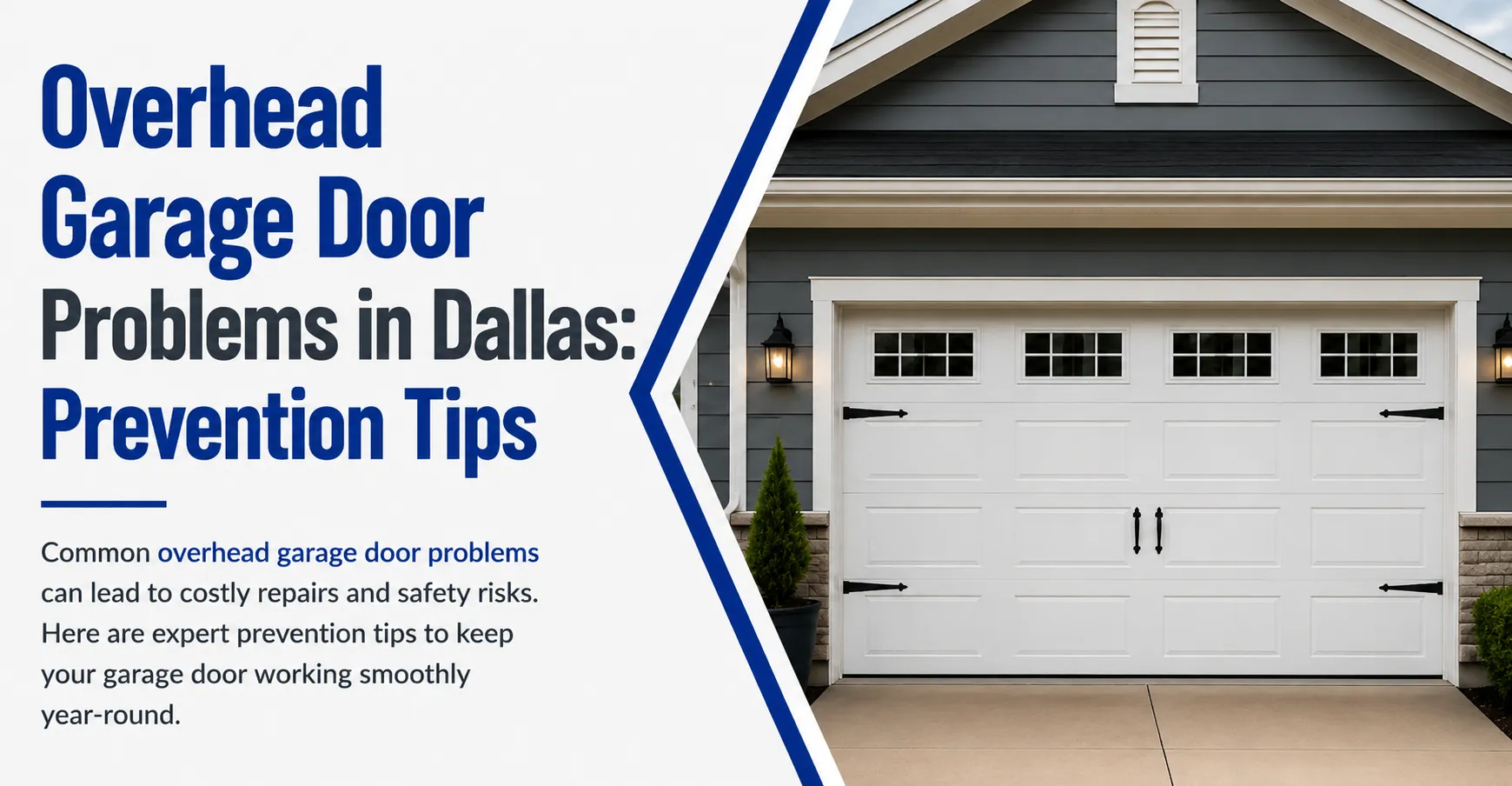

Overhead garage doors fail most often because of worn rollers, loose hardware, unbalanced springs, and skipped maintenance. Preventing these failures comes down to regular inspection, proper lubrication, and catching small problems before they turn into breakdowns.
This guide covers the most common overhead garage door failures, what causes them, and the exact steps Dallas homeowners can take to prevent costly repairs. You will also learn when a problem needs a professional instead of a DIY fix.
What Causes Overhead Garage Door Failures?
Overhead garage door failures usually start with a small mechanical issue that gets worse from daily use. Rollers wear down, springs lose tension, and hardware loosens from constant vibration every time the door opens and closes. A door that suddenly grinds, sticks, or opens crooked often points back to one of these root causes. Reviewing garage door grinding sounds can help homeowners match a specific noise to its likely mechanical cause.
An overhead garage door is a system of connected parts. When one part fails, it puts extra strain on the rest of the system, which is why small issues rarely stay small for long.
Why Preventing Overhead Garage Door Failures Matters
Preventing overhead garage door failures matters because a broken door creates a security risk and can trap a vehicle inside or outside the garage. Emergency repairs also cost more than routine maintenance.
A failed spring or cable can cause the door to drop suddenly, which creates a real safety hazard for anyone nearby. Understanding broken garage door spring symptoms helps homeowners recognize danger signs before a full failure happens.
In Dallas, heat, humidity, and seasonal temperature swings put extra stress on garage door hardware, which makes prevention even more important than in milder climates.
How to Prevent Overhead Garage Door Failures
Preventing overhead garage door failures follows a clear, repeatable maintenance routine.
1. Inspect rollers and tracks monthly. Look for wear, rust, or debris blocking smooth movement.
2. Lubricate moving parts every three months. Use a garage door specific lubricant on hinges, rollers, and springs.
3.Test the door balance twice a year. A door that will not hold its position mid travel signals spring problems.
4.Tighten loose hardware. Vibration loosens bolts and brackets over time, so check them regularly.
5.Check the auto reverse safety feature. Place an object in the door path to confirm it reverses properly.
6.Schedule a professional inspection once a year. A technician can catch wear that is hard to see from ground level.
Using the wrong product on moving parts is a common misstep, and reviewing these garage door lubrication mistakes helps homeowners avoid doing more harm than good during routine upkeep.
Benefits of Preventing Overhead Garage Door Failures
A consistent prevention routine protects both your budget and your family’s safety.
● Avoids expensive emergency repair calls
● Extends the lifespan of springs, cables, and rollers
● Reduces the risk of a sudden door drop
● Keeps the door opening and closing quietly
● Maintains proper home security
● Improves energy efficiency by keeping seals intact
Homeowners who follow a maintenance schedule typically spend far less on repairs over the life of their overhead garage door.
Common Overhead Garage Door Problems and Mistakes
The most common mistake is ignoring small noises or slow movement until the door stops working entirely. A door that opens slower than usual is often an early warning sign, not a minor inconvenience.
Another mistake is assuming rollers off track always mean the door needs full replacement. In many cases, garage door rollers off track can be realigned or replaced without touching the rest of the door system.
A homeowner should also never attempt to adjust or replace a torsion spring without proper training. The torsion spring holds extreme tension and can cause serious injury if handled incorrectly, which is why this repair should always go to a trained technician.
Cost Factors for Overhead Garage Door Repairs
Overhead garage door repair cost depends on which part failed, the door material, and whether the issue affects the springs or opener system.
Cable related repairs are common after years of wear, and reviewing current garage door cable cost information for the Dallas area helps homeowners budget before scheduling a repair.
How to Choose the Right Garage Door Repair Company
Choose a garage door repair company that offers clear pricing, licensed technicians, and fast response times for urgent issues.
A company that offers around the clock service matters most during an unexpected failure. Knowing you can call 24 hour garage door repair gives Dallas homeowners peace of mind if a door fails outside normal business hours.
Homeowners comparing local providers often check community discussions for honest feedback, such as this overhead garage doors thread where residents share real repair experiences and recommendations.
DFW Affordable Garage Door serves Dallas homeowners with routine maintenance, emergency repairs, and full replacements, all backed by technicians familiar with the wear patterns local weather causes.
Frequently Asked Questions
How often should I maintain my overhead garage door?
Most overhead garage doors need a full inspection and lubrication every three months, with a balance test twice a year. Homeowners in Dallas may need more frequent checks due to heat and humidity affecting hardware faster.
What is the most common cause of overhead garage door failure?
Worn rollers and unbalanced springs cause most overhead garage door failures. Both develop gradually from daily use, which makes regular inspection the best way to catch problems before the door stops working.
Can I prevent garage door failures myself?
Yes, basic maintenance like lubrication, visual inspection, and hardware tightening can be done safely at home. Spring and cable repairs involve high tension parts and should always be handled by a trained professional.
How much does overhead garage door repair cost?
Overhead garage door repair cost varies based on the part involved and the extent of the damage. Minor roller or hardware fixes cost less than spring, cable, or opener repairs.
What are signs my garage door needs professional repair?
Grinding noises, uneven movement, slow opening, or a door that will not hold its position all signal it is time to call a professional. Ignoring these signs often leads to a complete door failure.
How long does an overhead garage door usually last?
A well maintained overhead garage door typically lasts fifteen to thirty years, depending on material and usage. Regular maintenance and prompt repairs are the biggest factors in reaching the higher end of that range.
Conclusion
Preventing overhead garage door failures comes down to regular inspection, proper lubrication, and addressing small issues before they become major repairs. Dallas homeowners who follow a simple maintenance routine avoid most emergency breakdowns. Contact DFW Affordable Garage Door to schedule a professional inspection and keep your overhead garage door running safely.