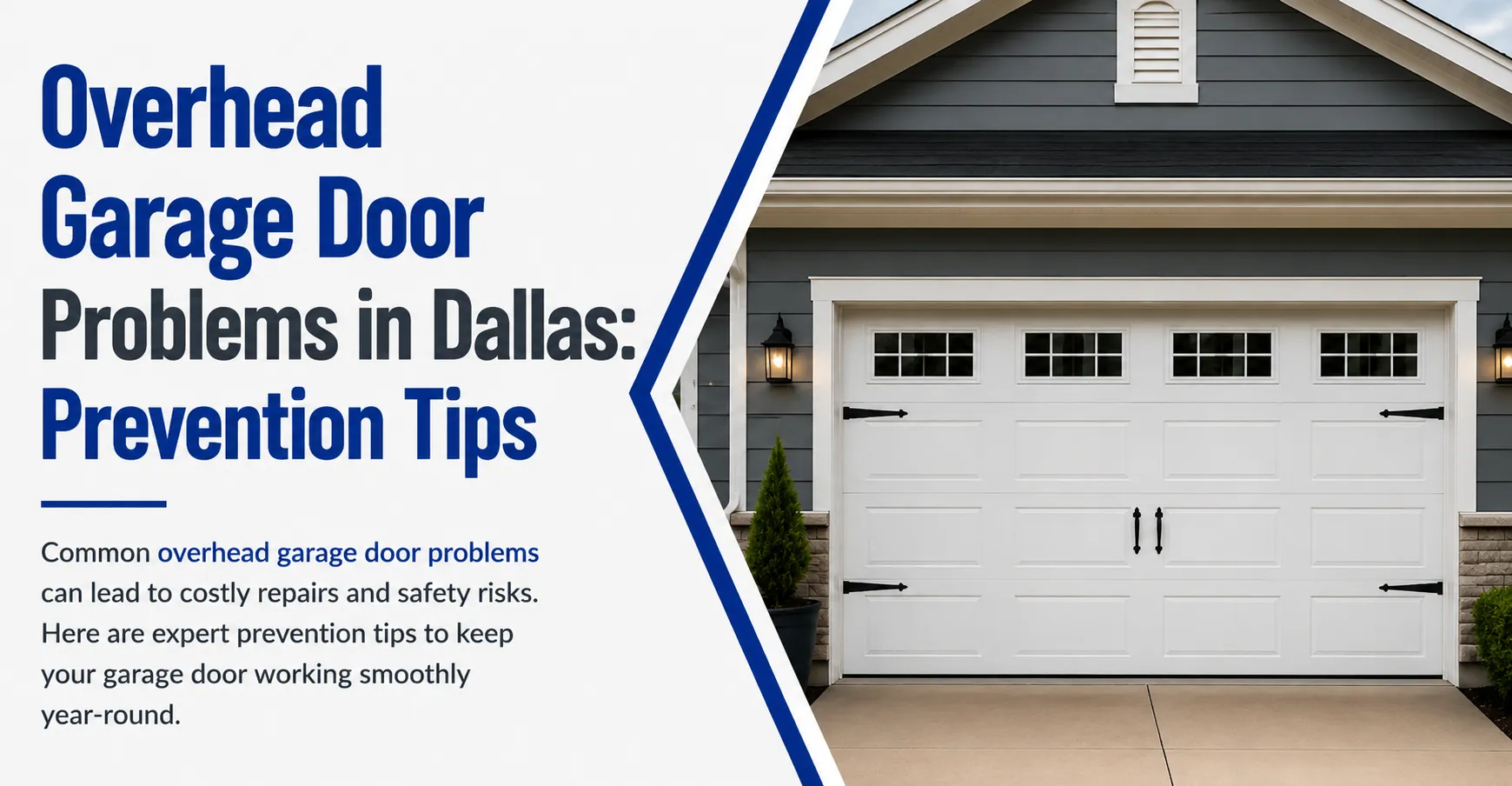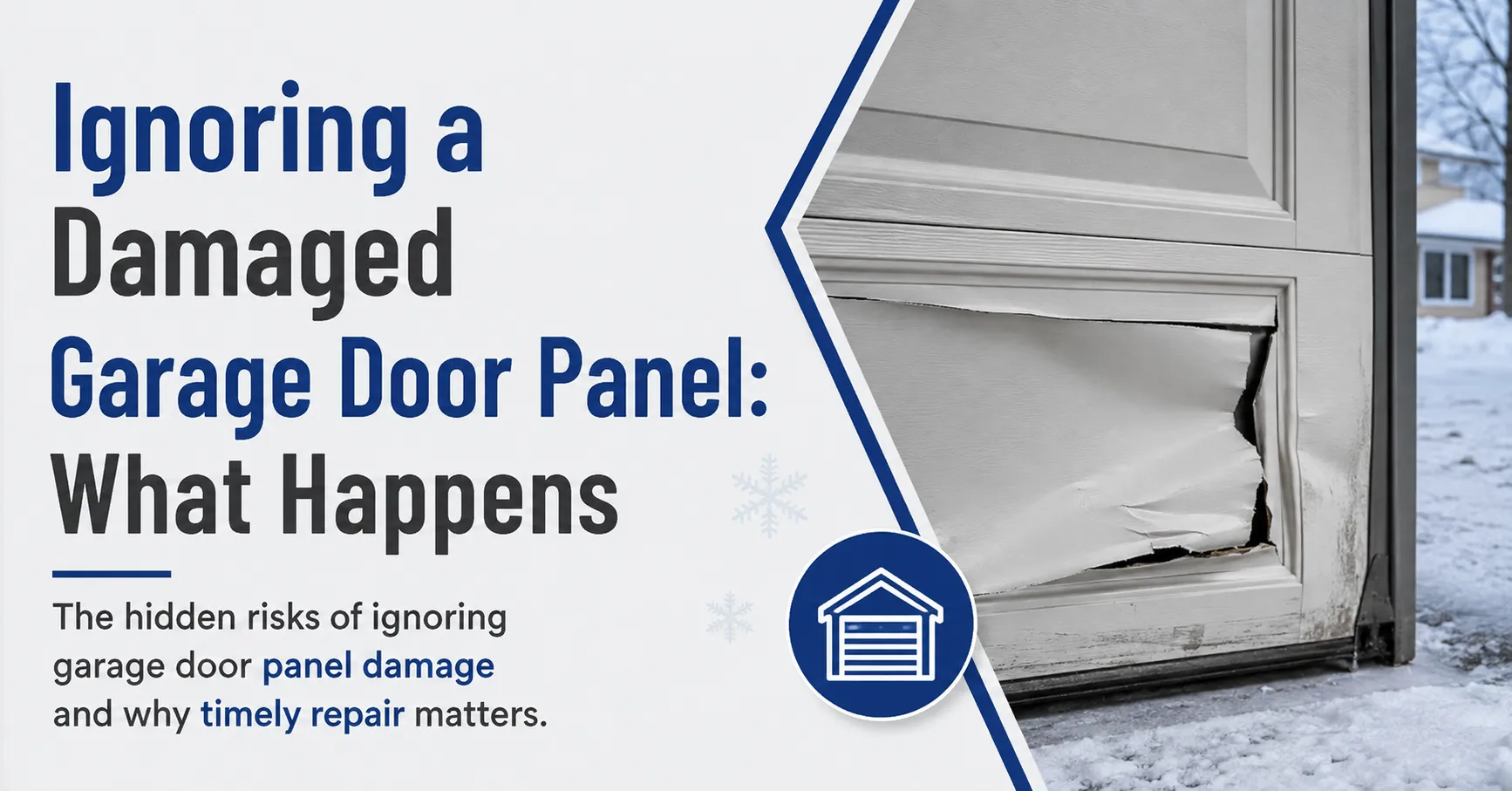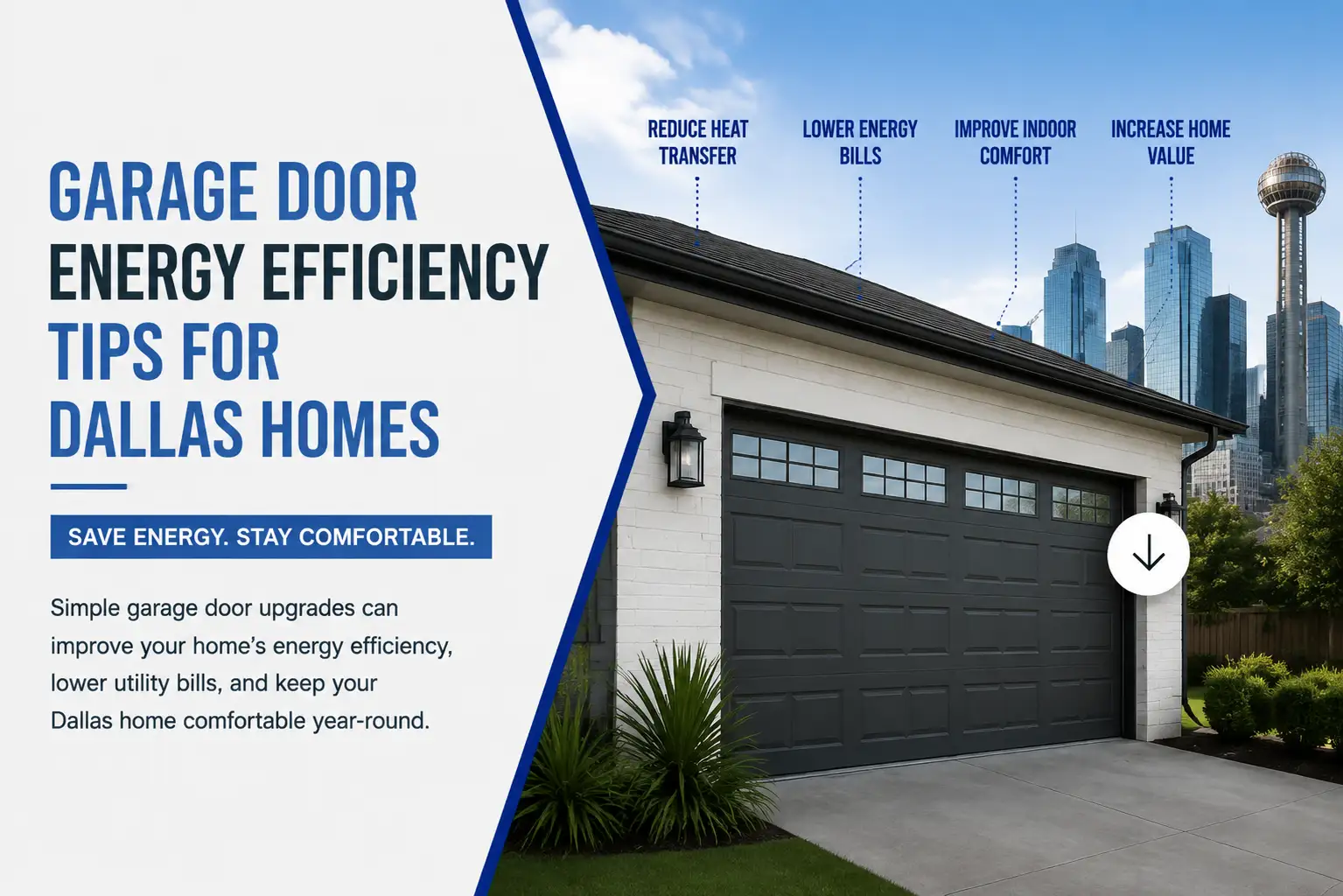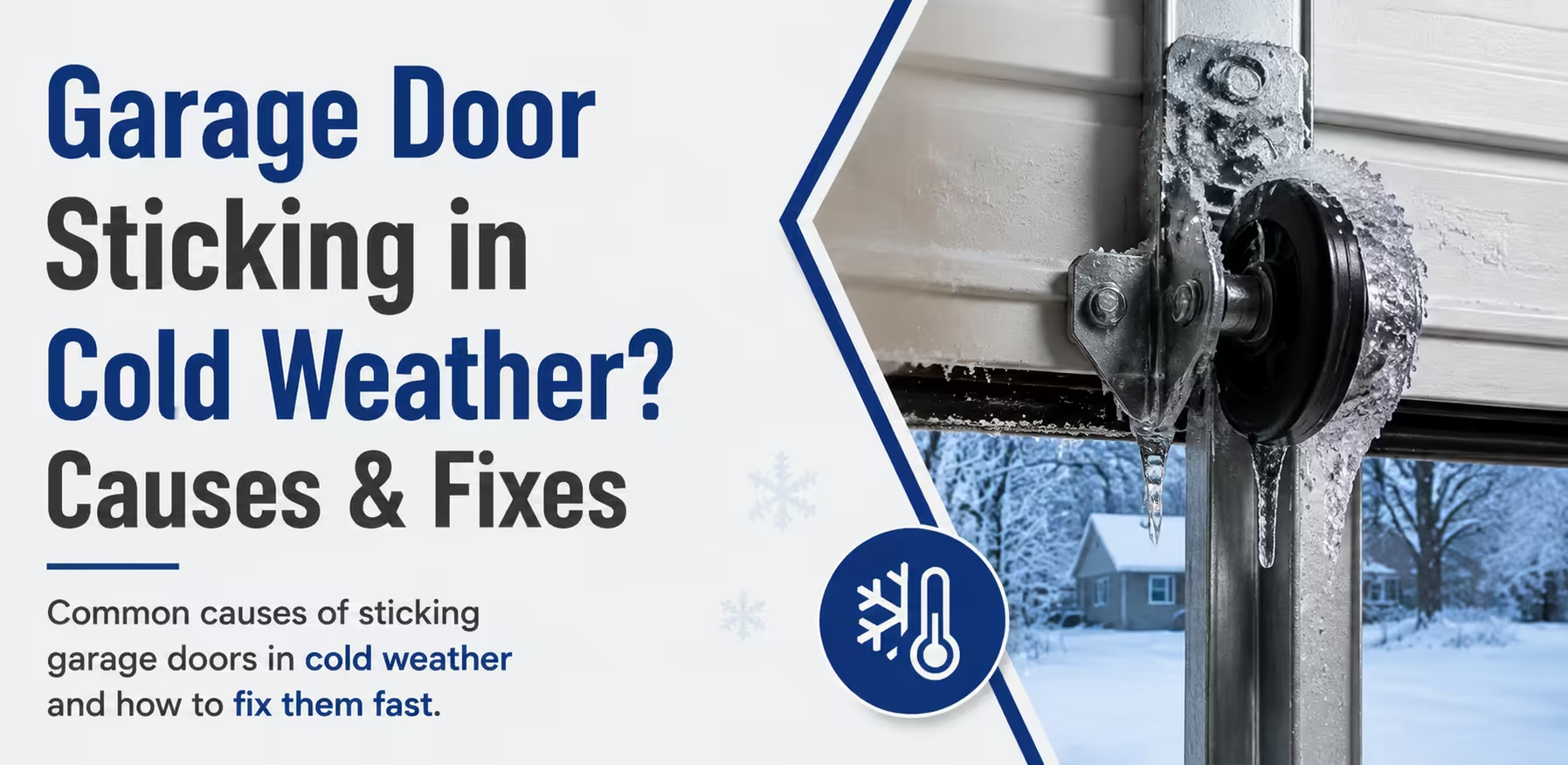
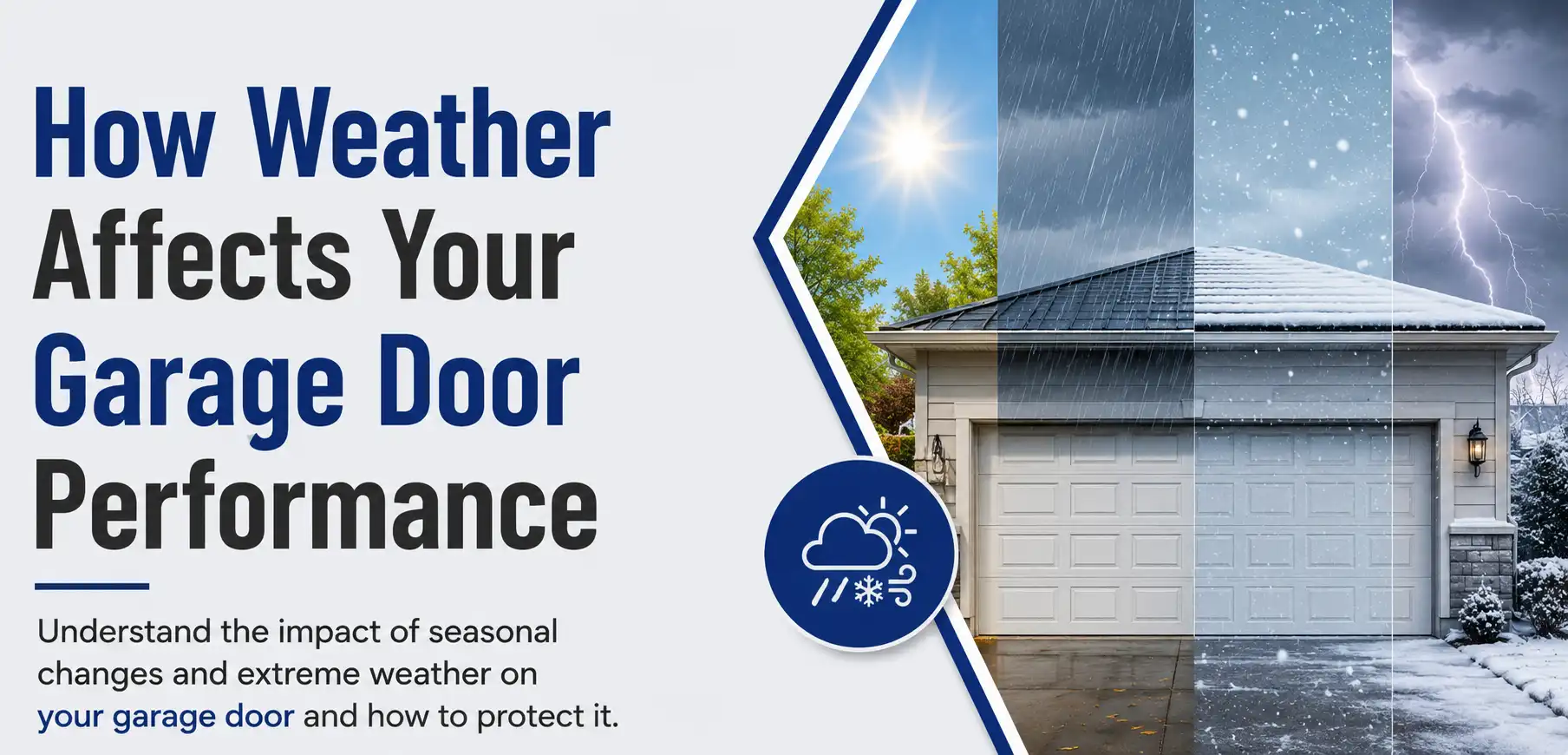

Weather changes affect your garage door by expanding and contracting metal components, drying out lubrication, and stressing the opener motor, springs, and rollers with every temperature swing. DFW Affordable Garage Door sees these seasonal patterns play out across Dallas homes every year, since North Texas swings from summer heat above 100°F to sudden winter cold snaps. This guide covers exactly how weather impacts garage door performance and what to do about it.
How Does Weather Affect a Garage Door?
Weather affects a garage door by causing metal components like tracks, springs, and hinges to expand in heat and contract in cold, changing how smoothly the door moves along its track. Temperature swings also affect lubricant viscosity, making it thicker and less effective in cold weather and causing it to dry out faster in extreme heat. Humidity adds another layer, accelerating rust on unprotected metal parts and affecting wood panel doors differently than steel or aluminum ones.
Why Weather Impact Matters for Dallas Homeowners
This matters because Dallas experiences some of the widest seasonal temperature swings in the country, stressing garage door components more than milder, more consistent climates. A garage door that performs fine in spring can suddenly stick, grind, or open unevenly once summer heat or a winter cold snap hits. Understanding these patterns helps homeowners catch problems early instead of being caught off guard by a seasonal breakdown.
How Different Weather Conditions Affect Garage Doors
DFW Affordable Garage Door sees distinct issues emerge across each season in North Texas.
Summer Heat
Extreme heat above 100°F causes metal tracks and springs to expand slightly, which can affect alignment and cause the door to open more slowly than usual. Heat also dries out lubricant faster, increasing friction on rollers and hinges.
Winter Cold Snaps
Cold weather makes lubricant thicken and metal contract slightly, which can cause sticking during cold weather. Rubber seals can also stiffen in the cold, affecting how well the door closes flush against the ground.
High Humidity
Humid conditions accelerate rust formation on unprotected metal hardware and can cause wood panel doors to swell slightly, affecting how smoothly they move.
Sudden Temperature Swings
Rapid shifts between hot and cold, common in North Texas spring and fall, put the most strain on components since they don’t have time to gradually adjust.
A garage door that operated smoothly the week before can suddenly show new symptoms overnight when temperatures drop sharply or spike unexpectedly. This is why homeowners often notice garage door issues clustering around seasonal transition periods rather than during steady, predictable weather.
Benefits of Weather-Proofing Your Garage Door
- Fewer seasonal breakdowns and service calls
- Longer lifespan for springs, rollers, and the opener motor
- More consistent, quiet operation across all seasons
- Lower risk of rust damage on metal hardware
Following proper garage door maintenance for Texas homes helps components handle seasonal stress far better than a door that only gets attention when something breaks.
Common Weather-Related Mistakes Homeowners Make
The most common mistake is using the same lubricant year-round instead of adjusting for seasonal temperature swings. Another common mistake is ignoring early rust spots, assuming they’re purely cosmetic when they can actually weaken hardware over time.
- Skipping lubrication before major seasonal temperature shifts
- Ignoring visible rust until it spreads to moving parts
- Not checking weather stripping and seals before winter
- Assuming a slow or uneven door will fix itself once weather changes
Reviewing basic garage door rust prevention steps ahead of Dallas’s humid summer months can meaningfully extend the life of exposed hardware. General background on thermal expansion and how metal components respond to temperature change is available on Thermal_expansion, which explains the physical principle behind why doors behave differently across seasons.
Weather-Related Repair Cost Factors
Repair cost for weather-related issues depends mainly on which component is affected and how much wear has already occurred.
| Issue | Lower Cost Range | Higher Cost Range |
| Dry or thickened lubricant | Basic lubrication service | Combined with roller or hinge replacement |
| Rust damage | Surface treatment and prevention | Hardware replacement if rust has spread |
| Weatherstripping/seals | Standard seal replacement | Full bottom seal and track adjustment |
| Track misalignment | Minor adjustment | Full track realignment or replacement |
How to Choose the Right Weather-Proofing Approach
Choose a seasonal maintenance schedule that includes lubrication before summer and winter, a rust check during humid months, and a seal inspection before cold weather arrives. A professional inspection twice a year catches most weather-related issues before they become costly repairs.
- Schedule lubrication ahead of major seasonal shifts, not after problems appear
- Inspect weather stripping and seals before winter cold arrives
- Address rust spots as soon as they’re noticed
- Ask a professional about weather-resistant hardware upgrades if issues recur yearly
Many Dallas homeowners compare notes on Garage-Doors about how their garage doors handle North Texas weather swings, and the consistent advice is proactive seasonal maintenance rather than waiting for a breakdown.
Frequently Asked Questions
Why does my garage door stick in cold weather?
Garage doors stick in cold weather because lubricant thickens and rubber seals stiffen, both of which increase friction and resistance. Switching to a cold-weather-rated lubricant before winter can help prevent this issue.
Can heat damage a garage door?
Yes, extreme heat can cause metal components to expand slightly, affecting alignment, and can dry out lubricant faster than normal. Regular summer maintenance helps prevent heat-related wear from becoming a bigger issue.
How often should I maintain my garage door for weather changes?
A seasonal maintenance check twice a year, once before summer and once before winter, is generally sufficient for most Dallas homes. Homes with older doors or frequent use may benefit from more frequent checks.
Does humidity affect garage door hardware?
Yes, high humidity accelerates rust formation on unprotected metal hardware and can cause wood panel doors to swell slightly. Rust-resistant coatings and regular inspection help minimize humidity-related damage.
What lubricant works best for Texas weather swings?
A silicone-based lubricant generally performs well across Texas’s wide temperature range, since it doesn’t thicken as much in cold or thin out as quickly in heat compared to other options. Avoid petroleum-based products, which can attract more dust and grime.
Final Thoughts
Weather changes affect your garage door through thermal expansion, lubricant breakdown, and rust risk, all of which are amplified by Dallas’s wide seasonal temperature swings. DFW Affordable Garage Door can inspect and maintain your garage door ahead of seasonal changes, keeping it running smoothly no matter what North Texas weather brings.