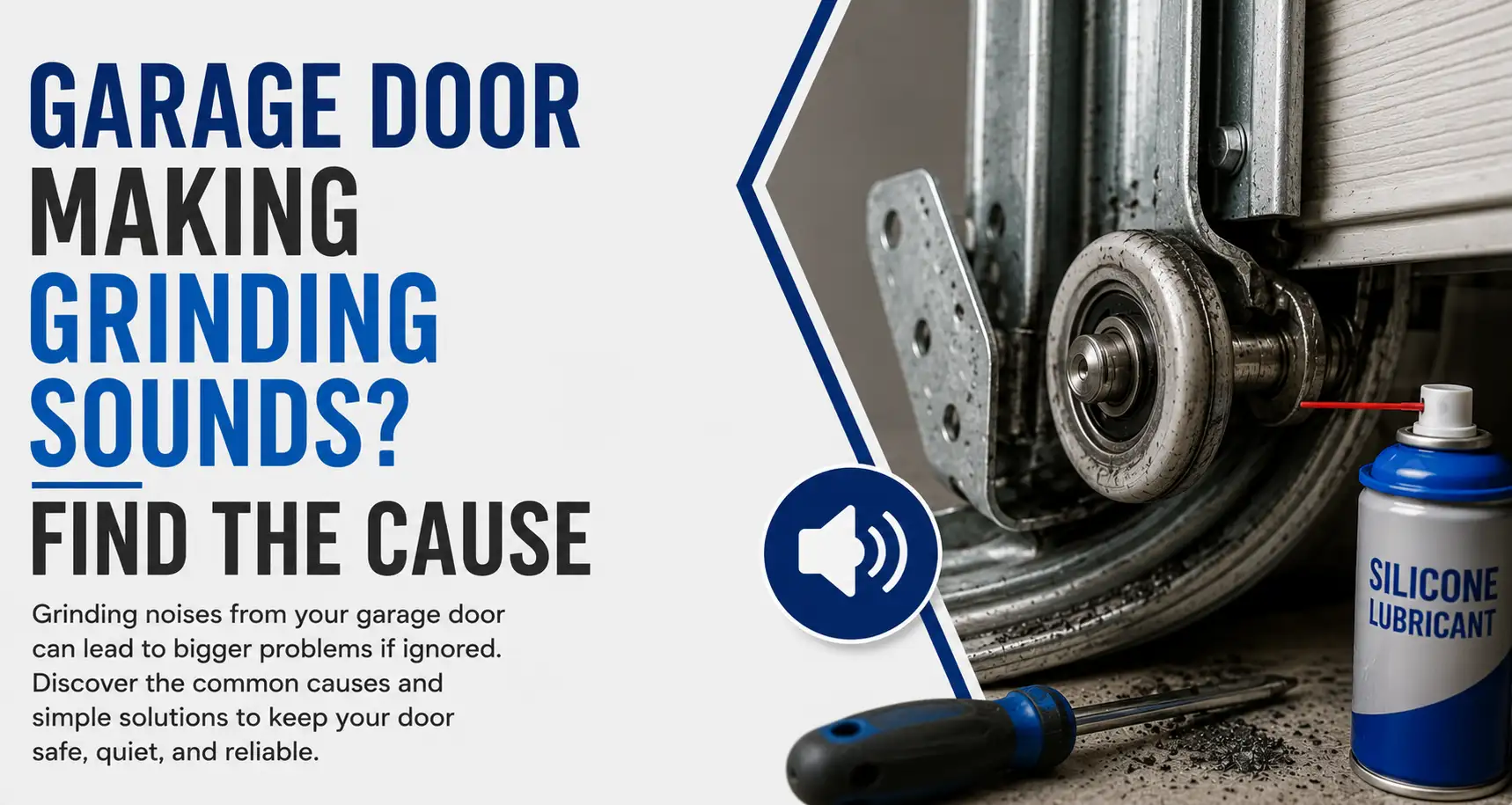

A grinding garage door almost always points to worn rollers, a failing motor gear, or metal-on-metal contact from a lack of lubrication. DFW Affordable Garage Door hears this exact complaint from Dallas homeowners constantly, and in most cases it’s an easy fix if caught early. This guide breaks down the most common causes of a grinding garage door and what to do about each one.
What Does a Grinding Garage Door Sound Mean?
A grinding sound means two metal parts are rubbing against each other without enough lubrication, or a component has worn down enough that it no longer moves smoothly. This is different from a rattling noise, which usually points to loose hardware, or a squeaking noise, which is almost always just a lubrication issue. Grinding is a more serious sound that typically points to actual wear on a moving part.
Why This Noise Matters
This noise matters because grinding almost always signals wear that gets worse, not better, over time. Dallas summers push garage temperatures well above 100°F, which dries out lubricant on rollers and hinges faster than in milder climates, accelerating metal-on-metal wear. Ignoring a grinding door risks a roller falling off the track, a motor gear stripping completely, or a spring failing under added strain.
The Most Likely Causes of Grinding Sounds
DFW Affordable Garage Door most commonly traces grinding sounds to one of four causes.
1. Worn or Damaged Rollers
Rollers that have flattened, cracked, or worn down their bearings will grind against the track instead of rolling smoothly. This is one of the most common garage door roller problems homeowners deal with, especially on doors that open and close multiple times a day.
2. Lack of Lubrication
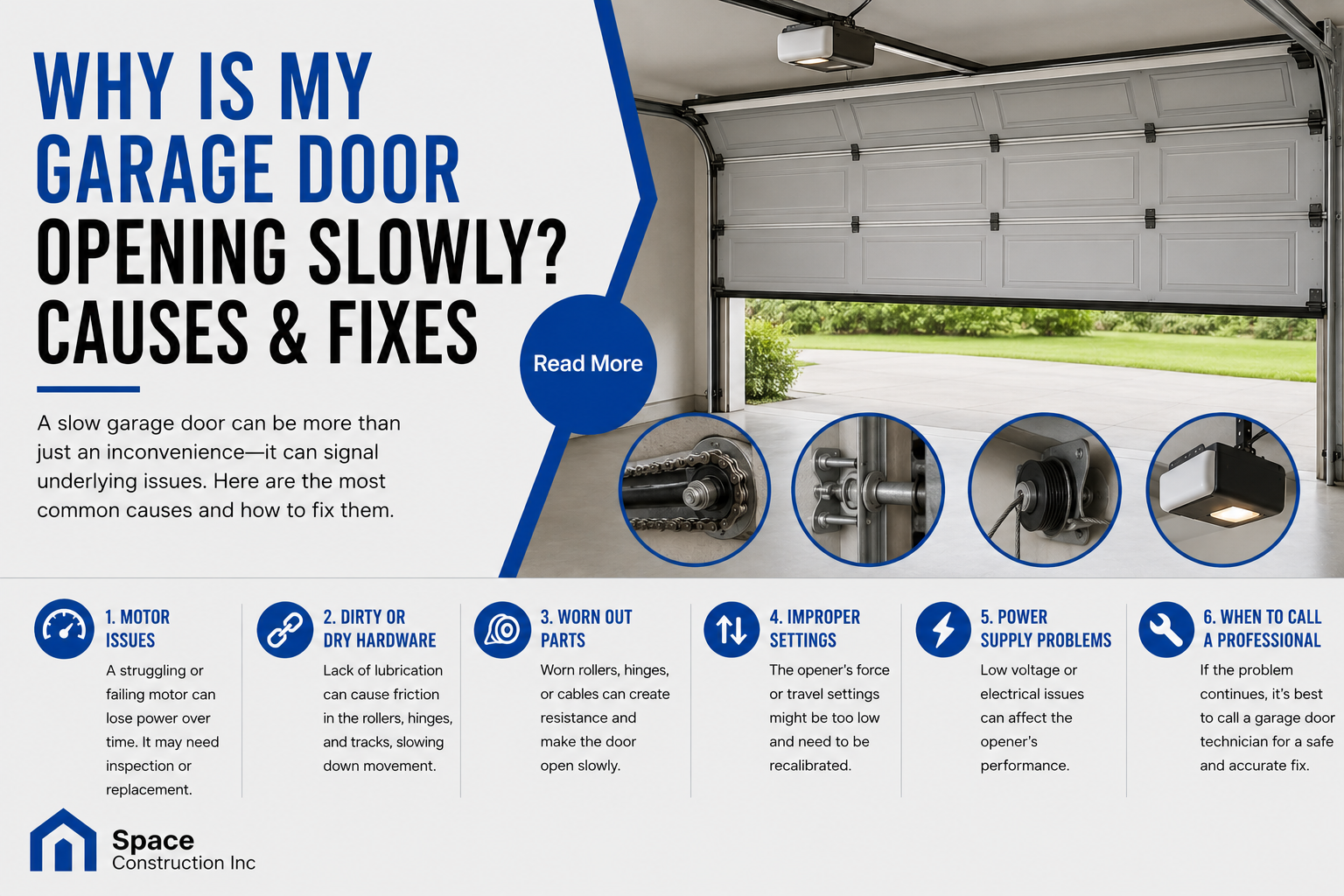
Dry hinges, rollers, and tracks create metal-on-metal friction that produces a grinding sound as the door moves. This is usually the easiest cause to fix, though it’s also one of the most commonly done incorrectly.
3. Failing Motor Gear
Inside the opener unit, a plastic drive gear can wear down and strip over time, creating a grinding noise that comes specifically from the motor housing rather than the door itself.
4. Torsion Tube or Spring Wear
A worn garage door torsion tube or spring assembly can also produce grinding as components under tension rub against worn bearing plates.
How to Diagnose a Grinding Garage Door
- Listen closely to identify whether the sound comes from the door track, the springs overhead, or the motor unit
- Visually inspect rollers for flat spots, cracks, or visible wear
- Check whether the grinding happens throughout the whole cycle or just at certain points
- Run a simple balance test to rule out spring tension issues
A quick garage door balance test can help you narrow down whether the grinding is roller-related or connected to spring tension, which changes the repair approach significantly.
Common Mistakes When Dealing with Grinding Sounds
The most common mistake is applying the wrong type of lubricant, which can attract more dust and actually make grinding worse over time. Another common mistake is ignoring the noise entirely until a roller falls off the track or the motor gear fails completely.
- Using WD-40 instead of proper silicone or lithium garage door lubricant
- Continuing to operate the door after noticing a new grinding sound
- Assuming all grinding noises are the same simple fix
- Attempting DIY spring or torsion tube repair, which can cause serious injury
Reviewing garage door lubrication mistakes before grabbing whatever’s in the garage can prevent a simple fix from turning into a bigger repair.
Garage Door Repair Cost Factors for Grinding Issues
Repair cost for a grinding garage door depends mainly on which component has failed and how much wear has already occurred.
| Cause | Lower Cost Range | Higher Cost Range |
| Worn rollers | A few nylon rollers replaced | Full roller set with steel upgrade |
| Dry lubrication | Basic lubrication service call | Combined with roller or hinge replacement |
| Motor gear | Drive gear kit replacement | Full opener motor replacement |
| Torsion/spring wear | Bearing plate replacement | Full spring and cable replacement |
Comparing nylon versus steel garage rollers is worth doing if worn rollers are the cause, since upgrading roller type can reduce future noise and maintenance needs.
How to Choose the Right Fix for a Grinding Garage Door
Choose a simple lubrication and roller check first if the grinding is new and mild. Call a professional immediately if the grinding comes from the spring or motor area, since both involve components under tension or complex gearing that shouldn’t be handled without training.
- Get a professional diagnosis before assuming the simplest fix
- Ask for an inspection of rollers, hinges, and the torsion system together
- Address grinding sounds promptly instead of waiting for a full breakdown
- Confirm warranty coverage on any replaced parts
Many Dallas homeowners compare notes on Garage-Doors about garage door noise issues, and the recurring advice is to get a professional opinion before a minor grinding sound turns into an emergency repair.
Frequently Asked Questions
Why is my garage door making a grinding noise?
A grinding garage door noise is most often caused by worn rollers, dry hinges and tracks, or a failing motor gear. Less commonly, it can point to torsion tube or spring wear that needs professional attention.
Is it safe to keep using a garage door that’s grinding?
It’s not recommended to keep using a grinding garage door, since the noise usually signals worsening wear on a moving part. Continuing to operate the door can lead to a roller falling off track or a complete motor gear failure.
What type of lubricant stops garage door grinding?
A silicone-based or lithium grease garage door lubricant is recommended for rollers, hinges, and tracks. Avoid general-purpose sprays like WD-40, which can attract dust and grime that makes grinding worse over time.
How much does it cost to fix a grinding garage door?
Fixing a grinding garage door in Dallas typically costs between $100 and $400, depending on whether the issue is worn rollers, dry lubrication, or a motor gear replacement. Spring or torsion tube repairs can cost more due to the complexity and safety requirements involved.
Can grinding sounds mean my garage door needs to be replaced?
Grinding sounds alone rarely mean a full door replacement is needed. Most grinding issues can be resolved with roller, hinge, or motor gear repairs, and replacement is usually only necessary if the door itself has separate structural damage.
Final Thoughts
A grinding garage door is almost always caused by worn rollers, dry lubrication, or a failing motor gear, and catching it early keeps the fix simple and affordable. DFW Affordable Garage Door can diagnose the exact cause of your grinding garage door in Dallas and get it running smoothly and quietly again.